AI Has a People Problem
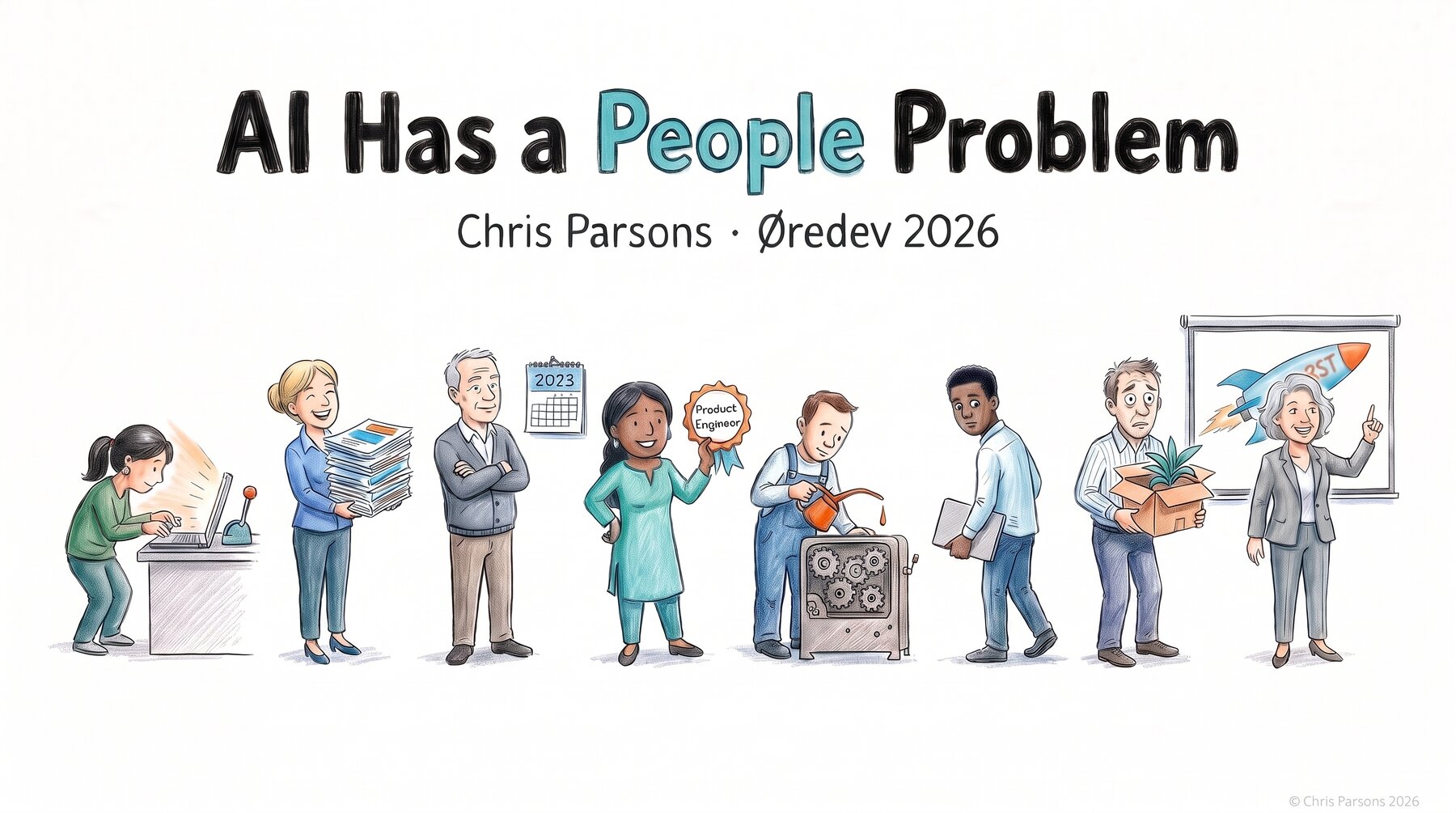
AI Has a People Problem

AI Has a People Problem, Chris Parsons, Øredev 2026: the eight characters in a row, Angela, Sinead, Pete, Nadia, Marvin, Theo, Frank and Victoria.
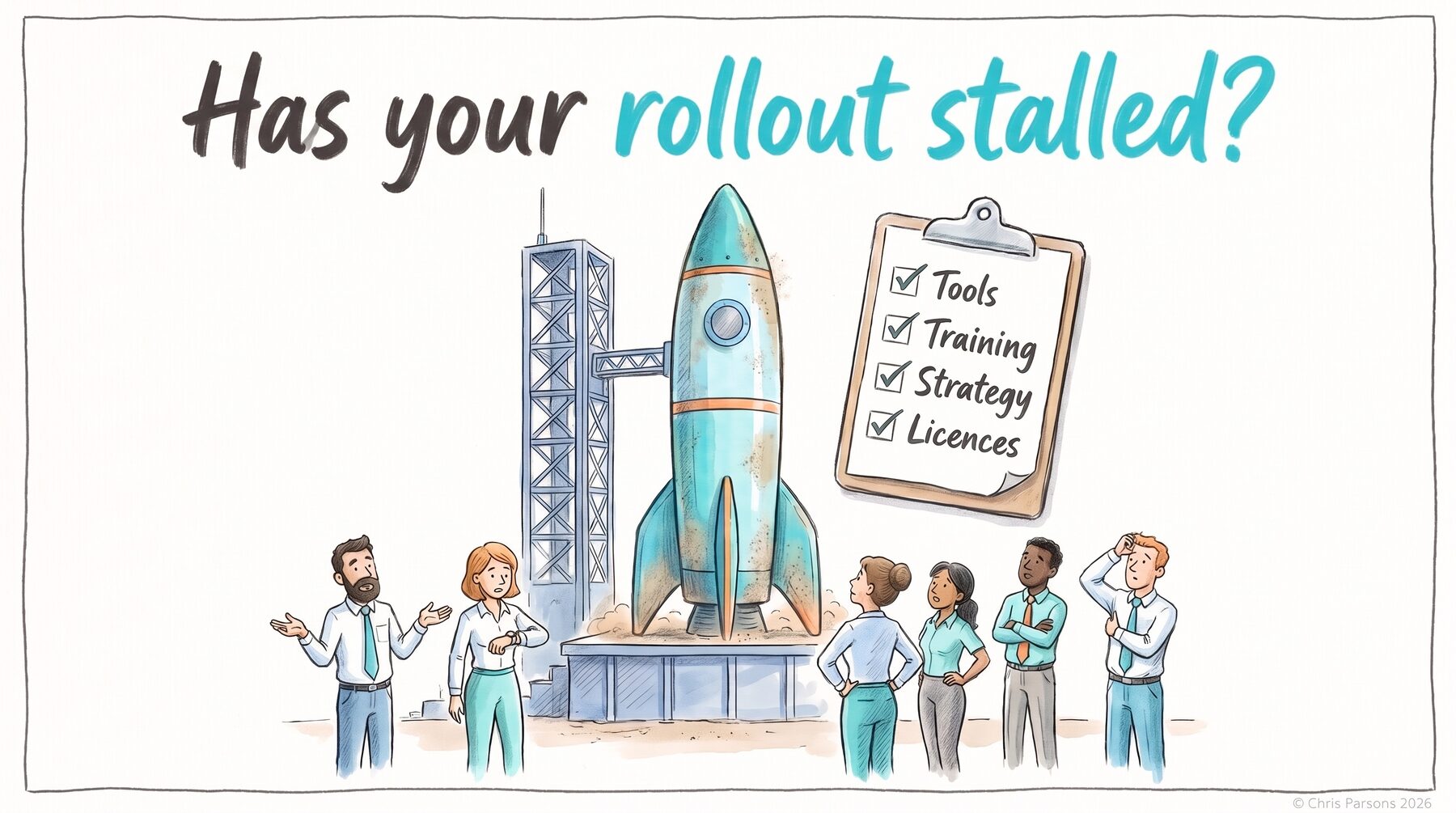
Has your rollout stalled? A dusty rocket on the launch pad beside a clipboard with Tools, Training, Strategy and Licences all ticked, and six colleagues shrugging at its base.
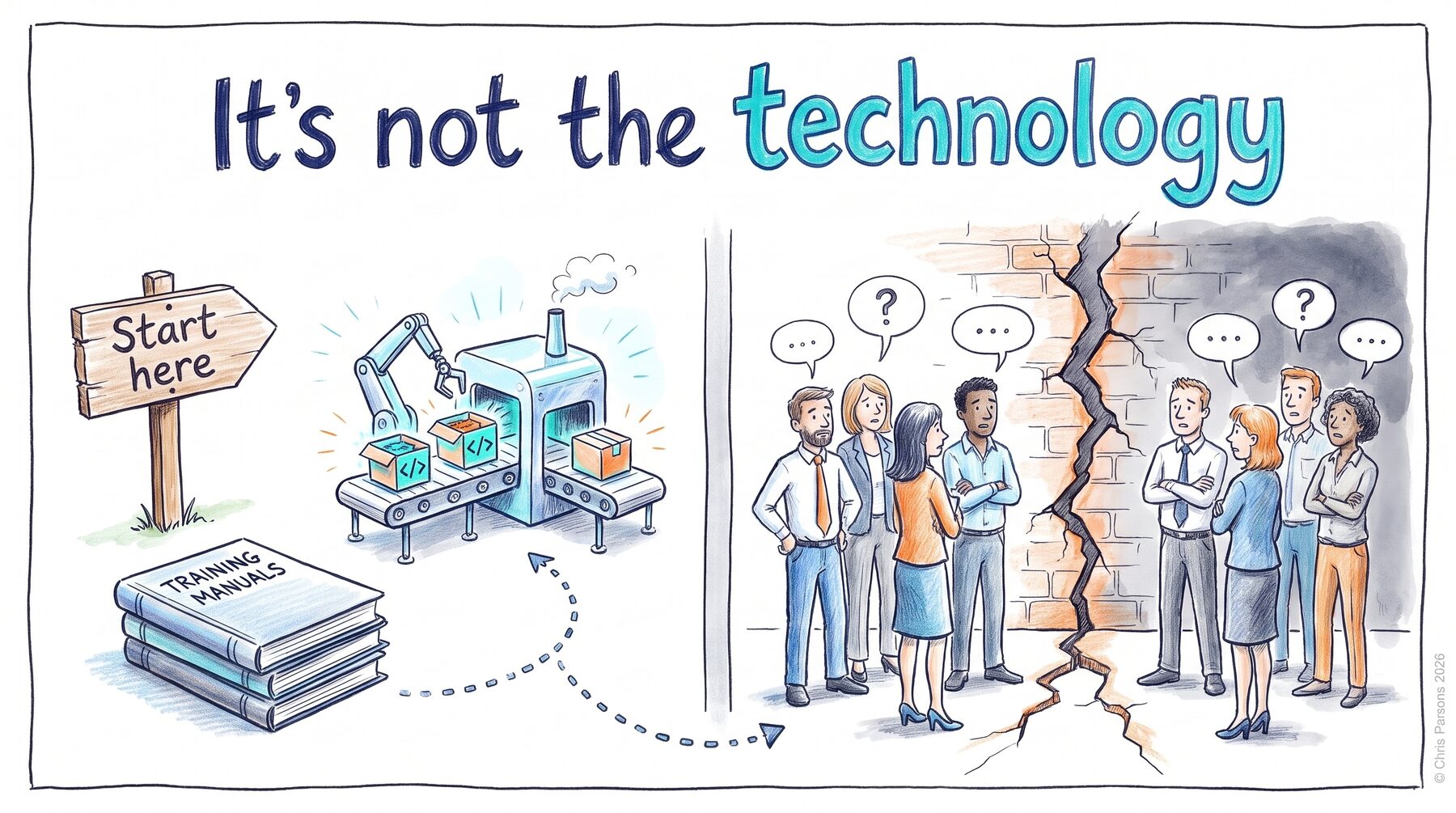
It's not the technology: a Start here signpost beside training manuals and a small shiny software factory, with a dotted path leading on to colleagues split by a crack in a wall.
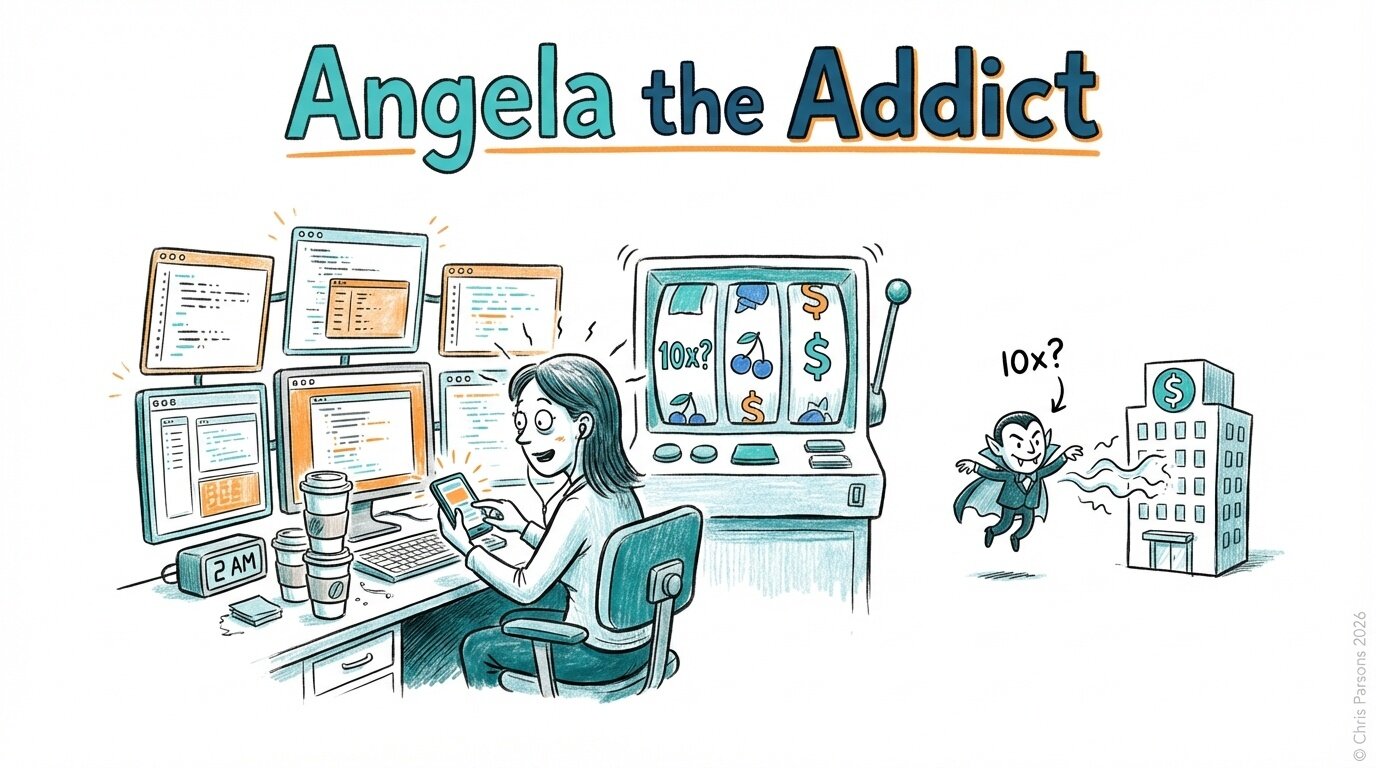
Angela the Addict: a developer at 2am surrounded by screens, pulling a slot-machine lever.
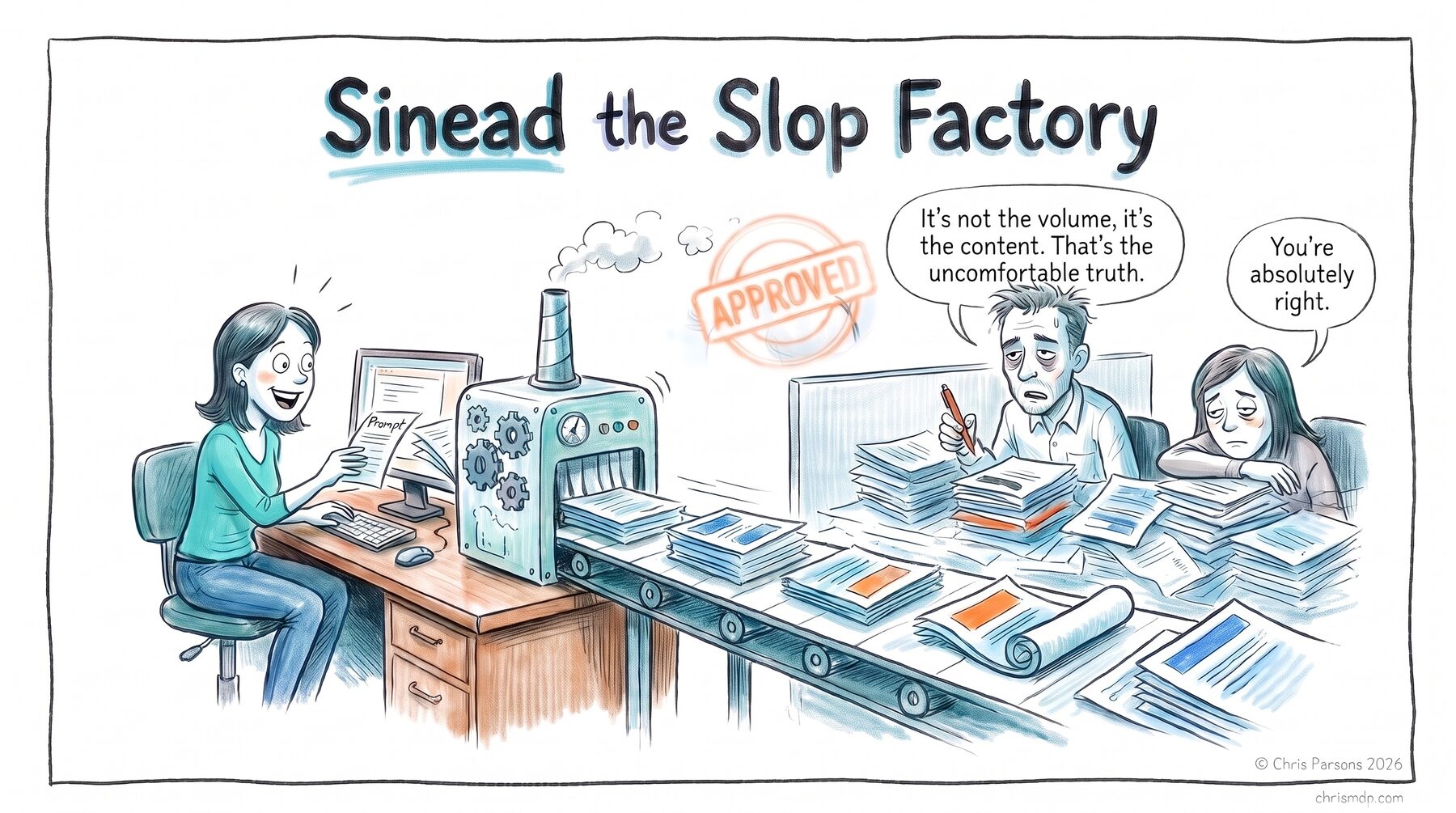
Sinead the Slop Factory: a cheerful woman feeding prompts into a machine that churns out documents onto two exhausted reviewers. One says: It's not the volume, it's the content. That's the uncomfortable truth. The other says: You're absolutely right.
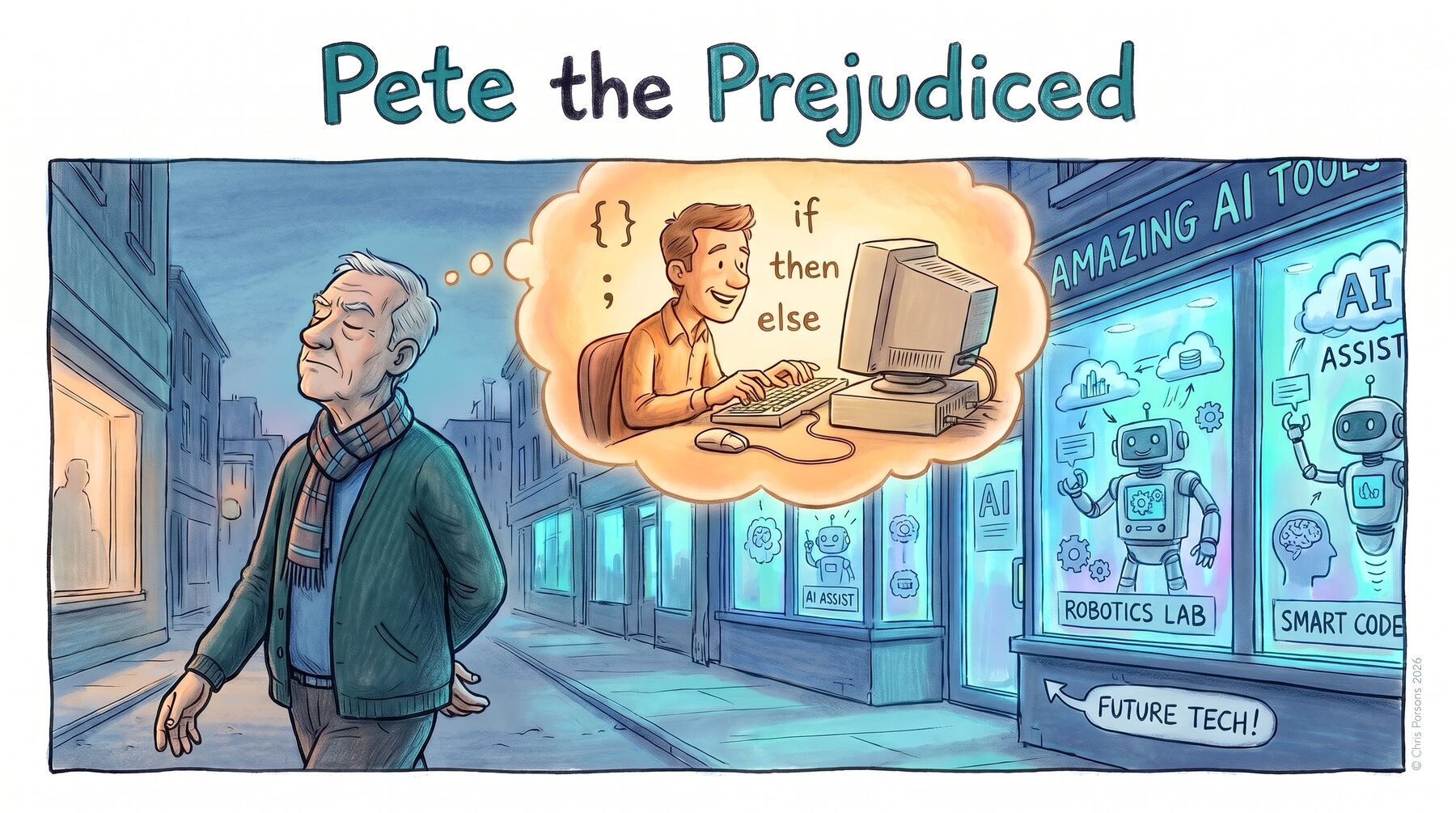
Pete the Prejudiced: a grey-haired engineer walks past glowing shop windows full of AI tools with his eyes shut, like Scrooge, remembering his younger self happily typing code at an old computer, with if, then and else floating around him.

Calestous Juma, Innovation and Its Enemies, Oxford University Press, 2016

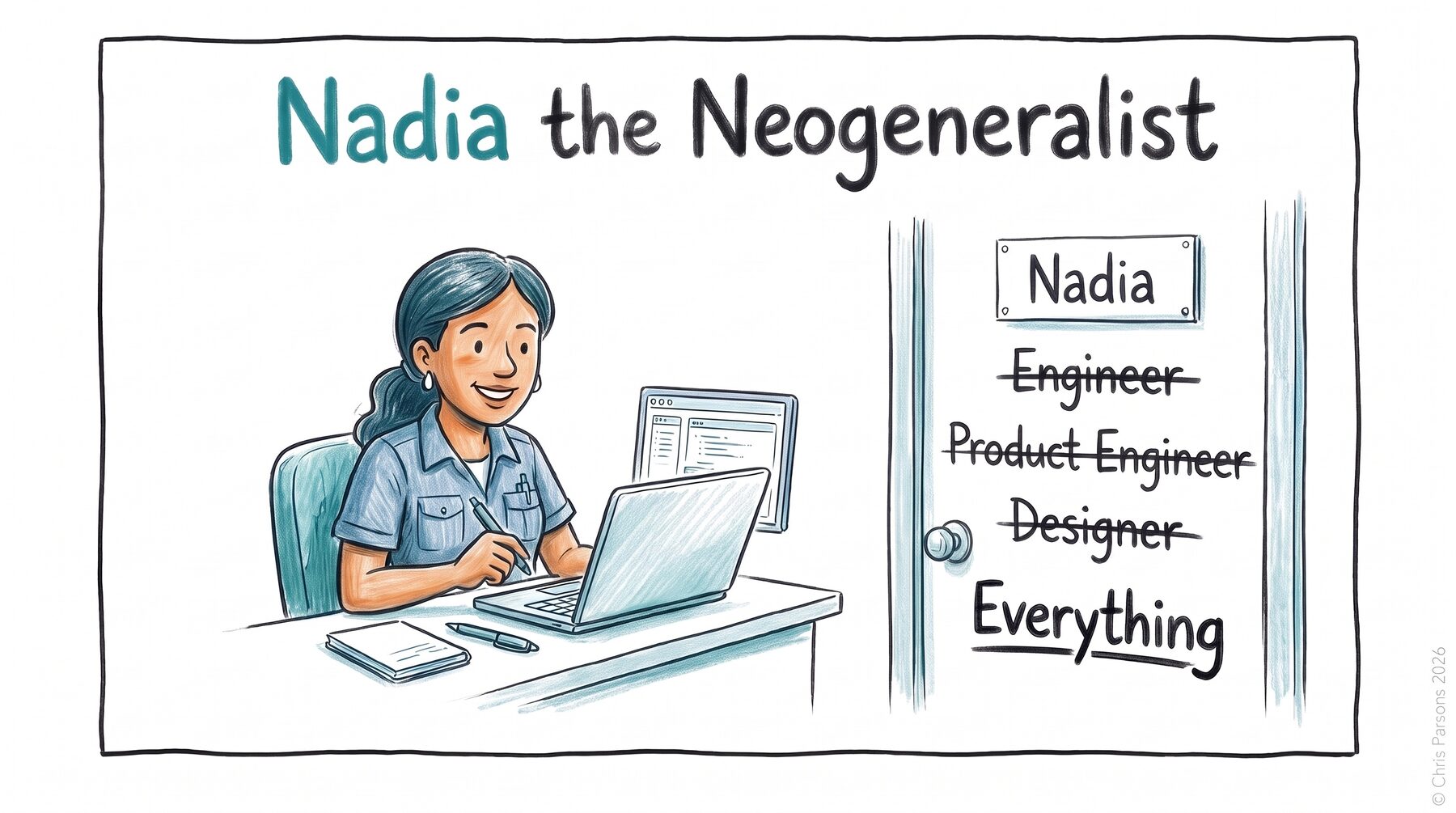
Nadia the Neogeneralist: a confident South Asian engineer at her desk beside her office door, where Engineer, Product Engineer and Designer are crossed out and Everything is written underneath.
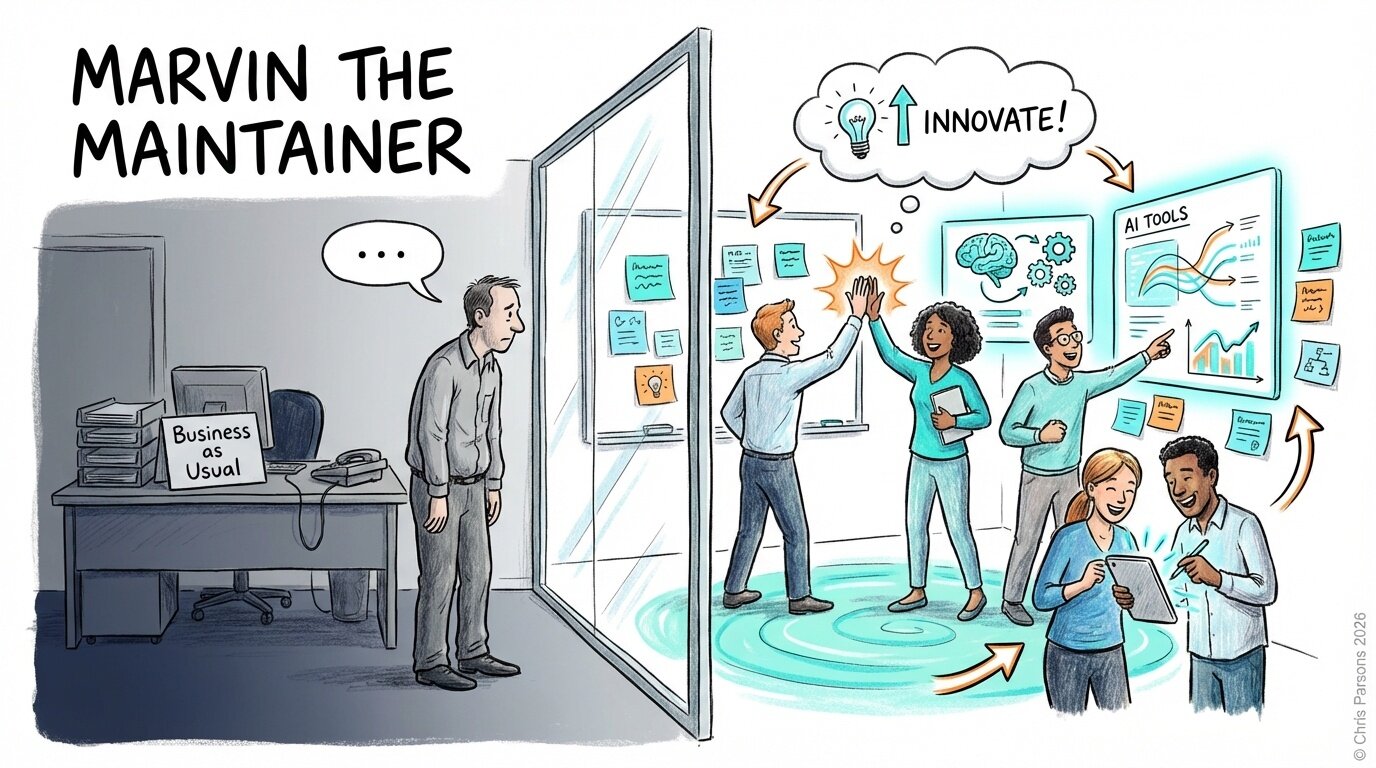
Marvin the Maintainer: a man alone in a grey office watching a lively AI team through a glass wall.
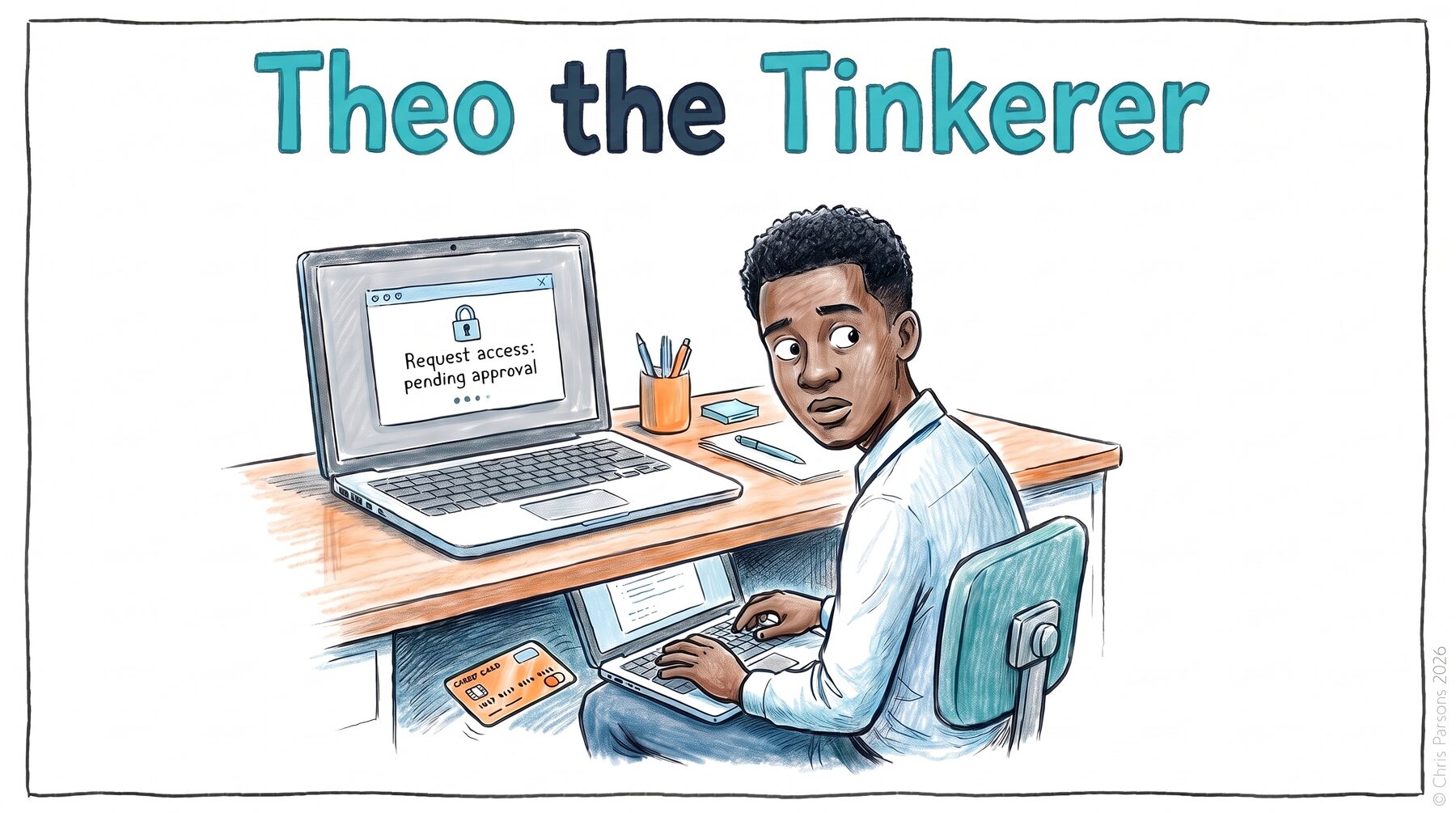
Theo the Tinkerer: a young developer with the official laptop showing Request access: pending approval, quietly working on his own laptop under the desk, a credit card beside it.
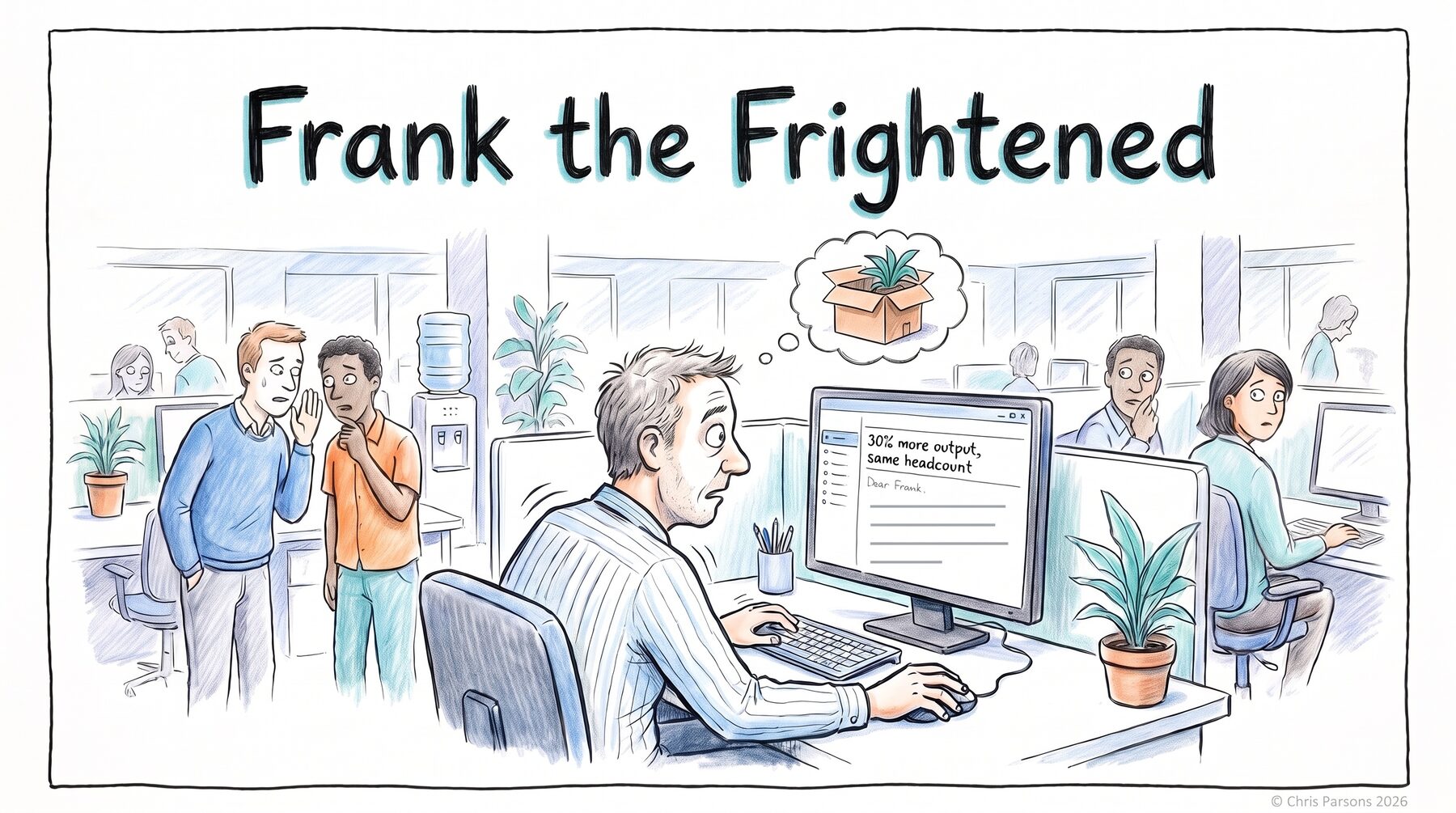
Frank the Frightened: an engineer reading an all-staff email headed 30% more output, same headcount, imagining his desk in a cardboard box.
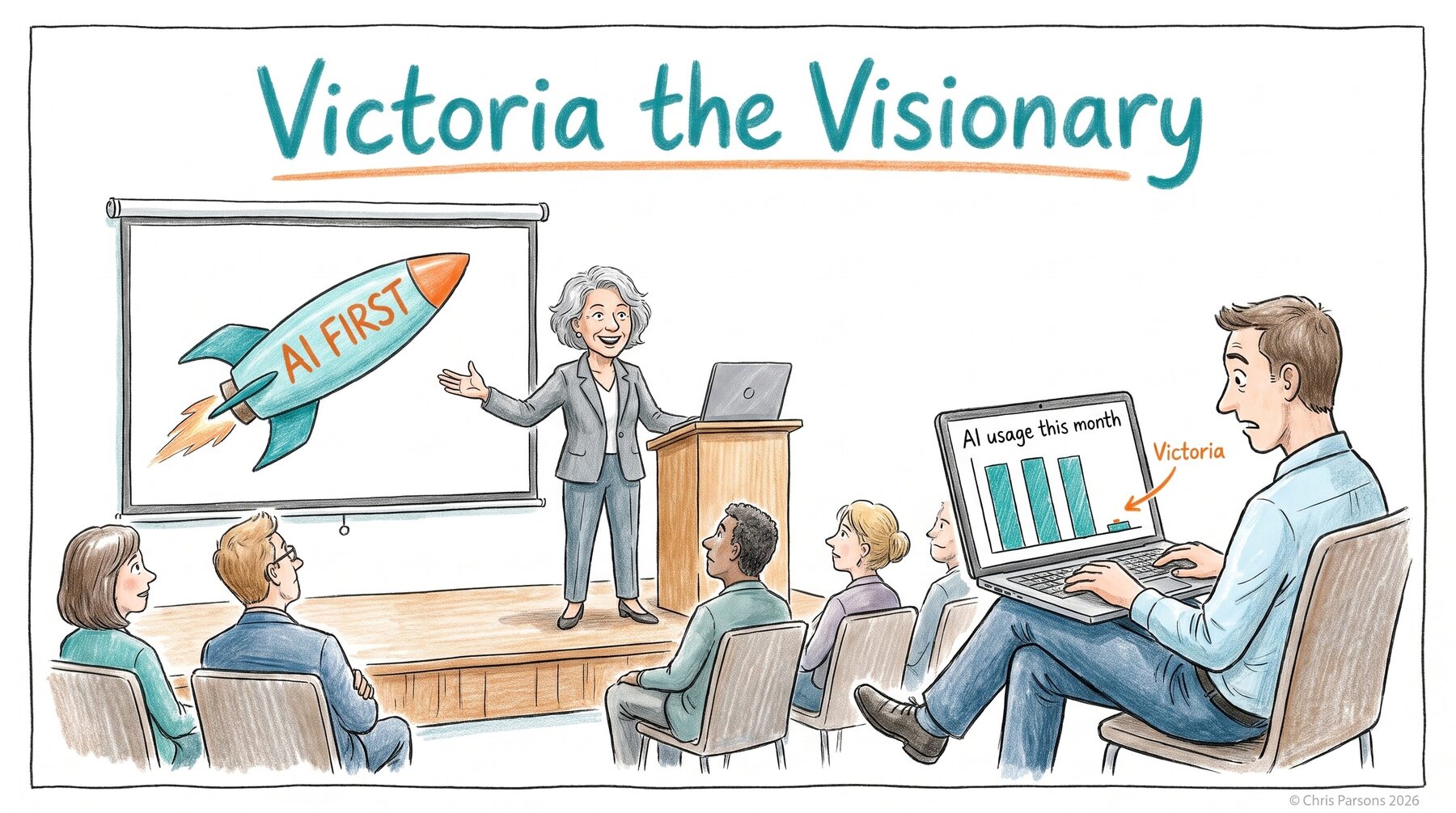
Victoria the Visionary: a senior woman executive on stage presenting AI FIRST, while a man in the audience stares at his laptop, where her bar on the AI usage chart is the lowest.
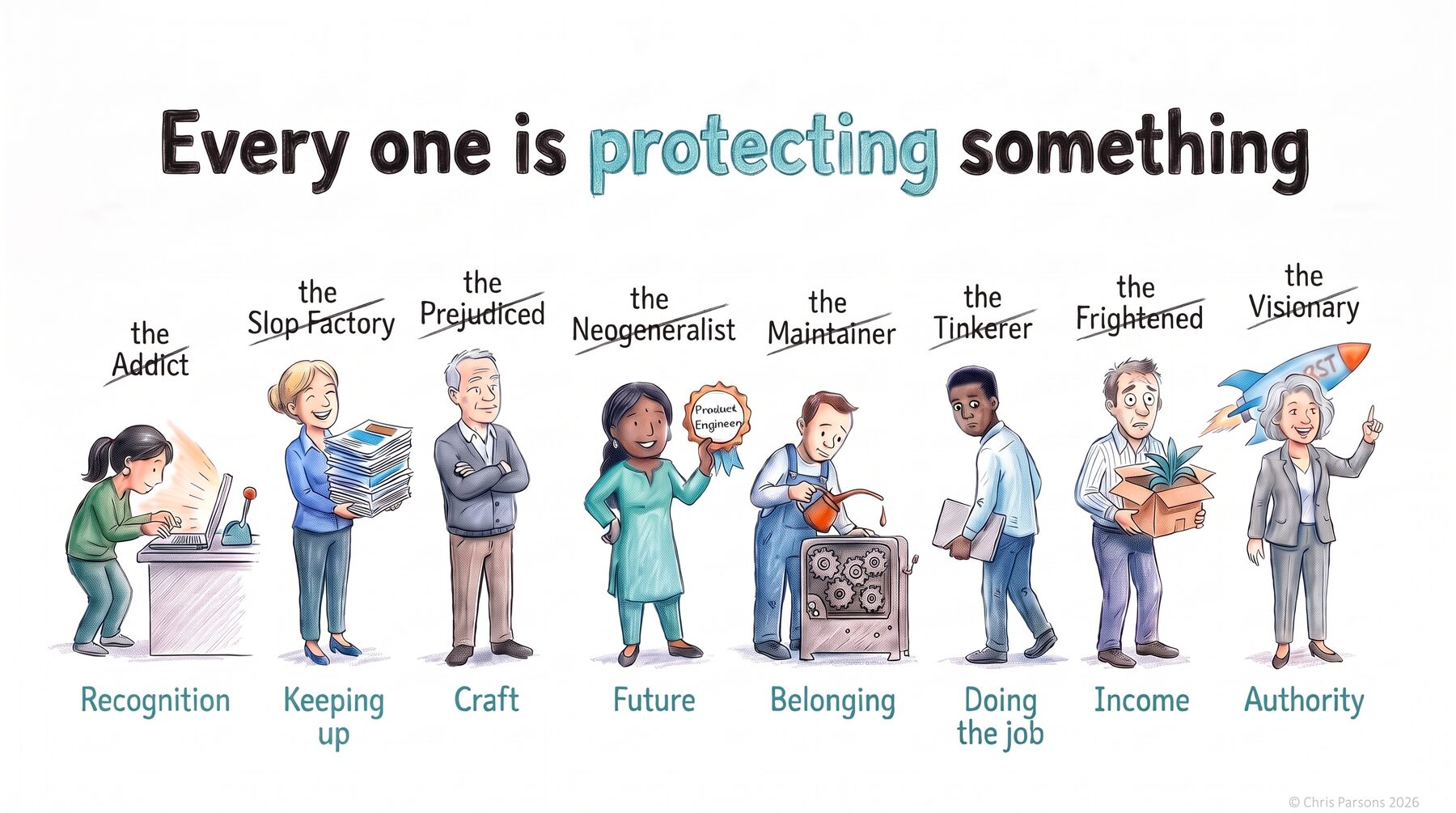
Every one is protecting something: the eight characters again, each label crossed out, and under each what they are protecting: recognition, keeping up, craft, future, belonging, doing the job, income, authority.
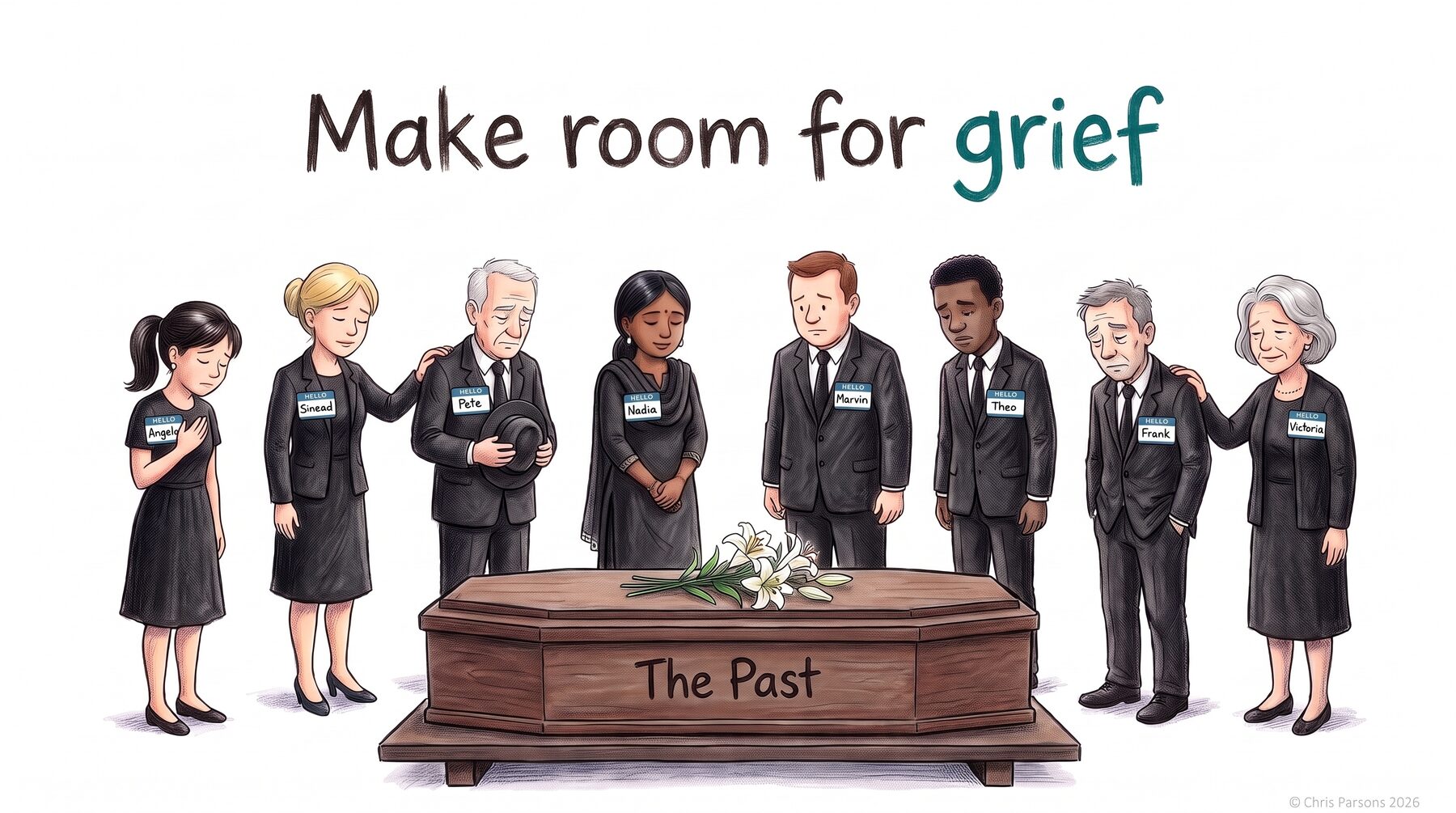
Make room for grief: the eight characters, all dressed in black and wearing name badges, stand at a funeral around a wooden coffin with The Past written on its side and lilies on the lid.

Lenny Rachitsky and Noam Segal, survey of tech workers, 2026

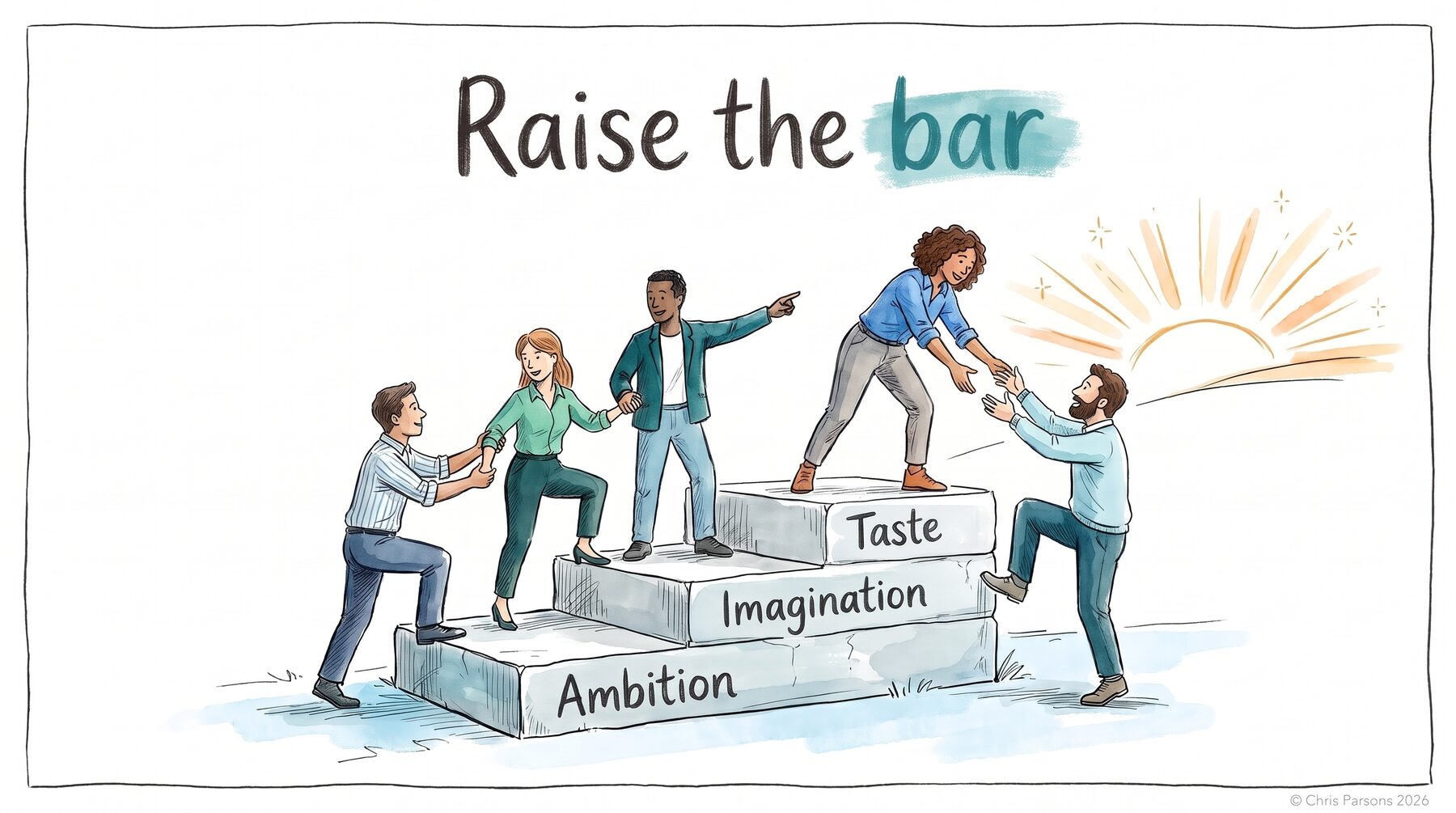
Raise the bar: colleagues helping each other up three stone steps labelled Ambition, Imagination and Taste towards a rising sun.
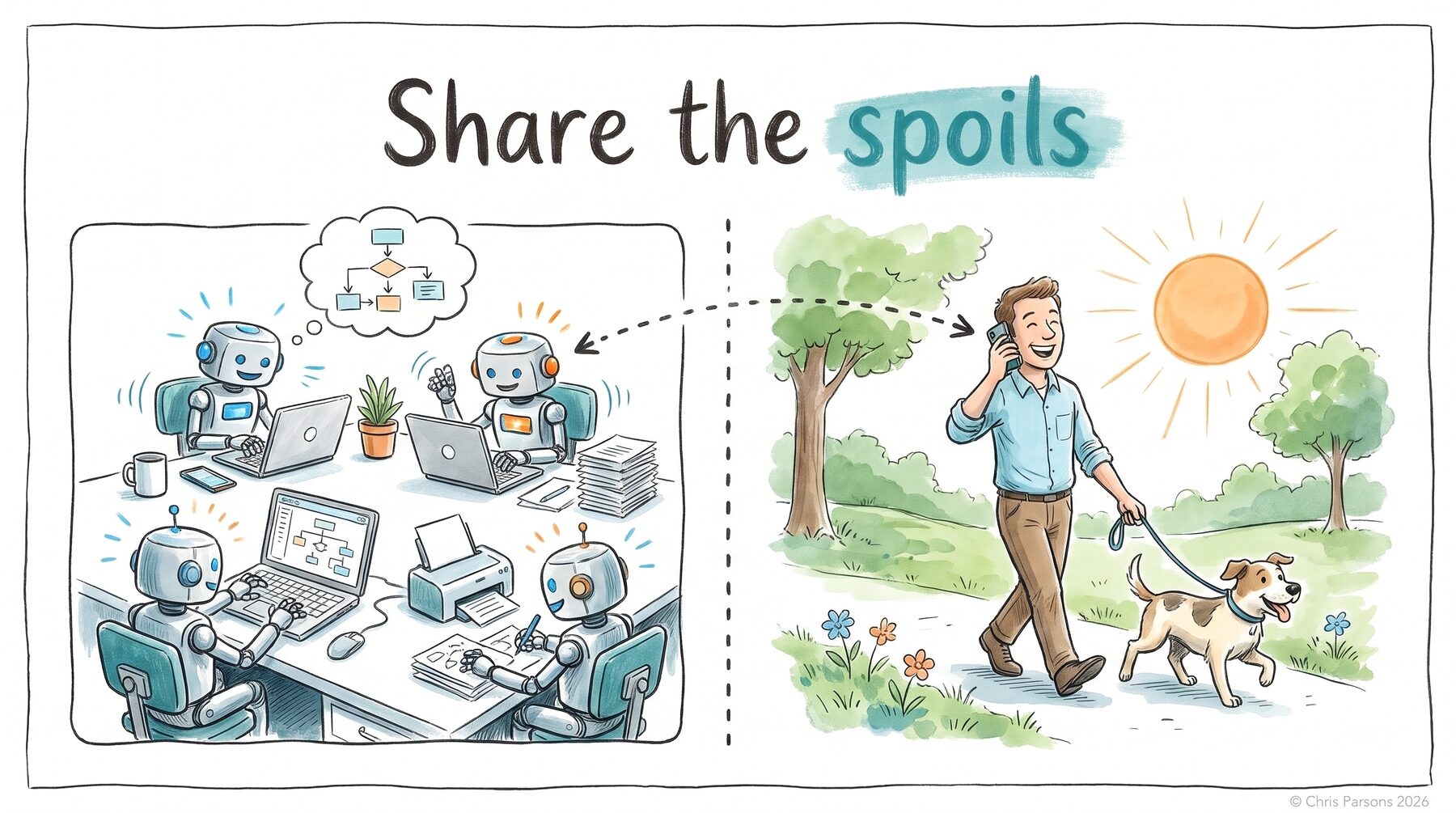
Share the spoils: small robot agents busily working at an empty office desk, joined by a dotted line to the developer who owns it, walking a dog in a sunny park and speaking into a phone.

Robert Allen, "Engels' pause", Explorations in Economic History, 2009

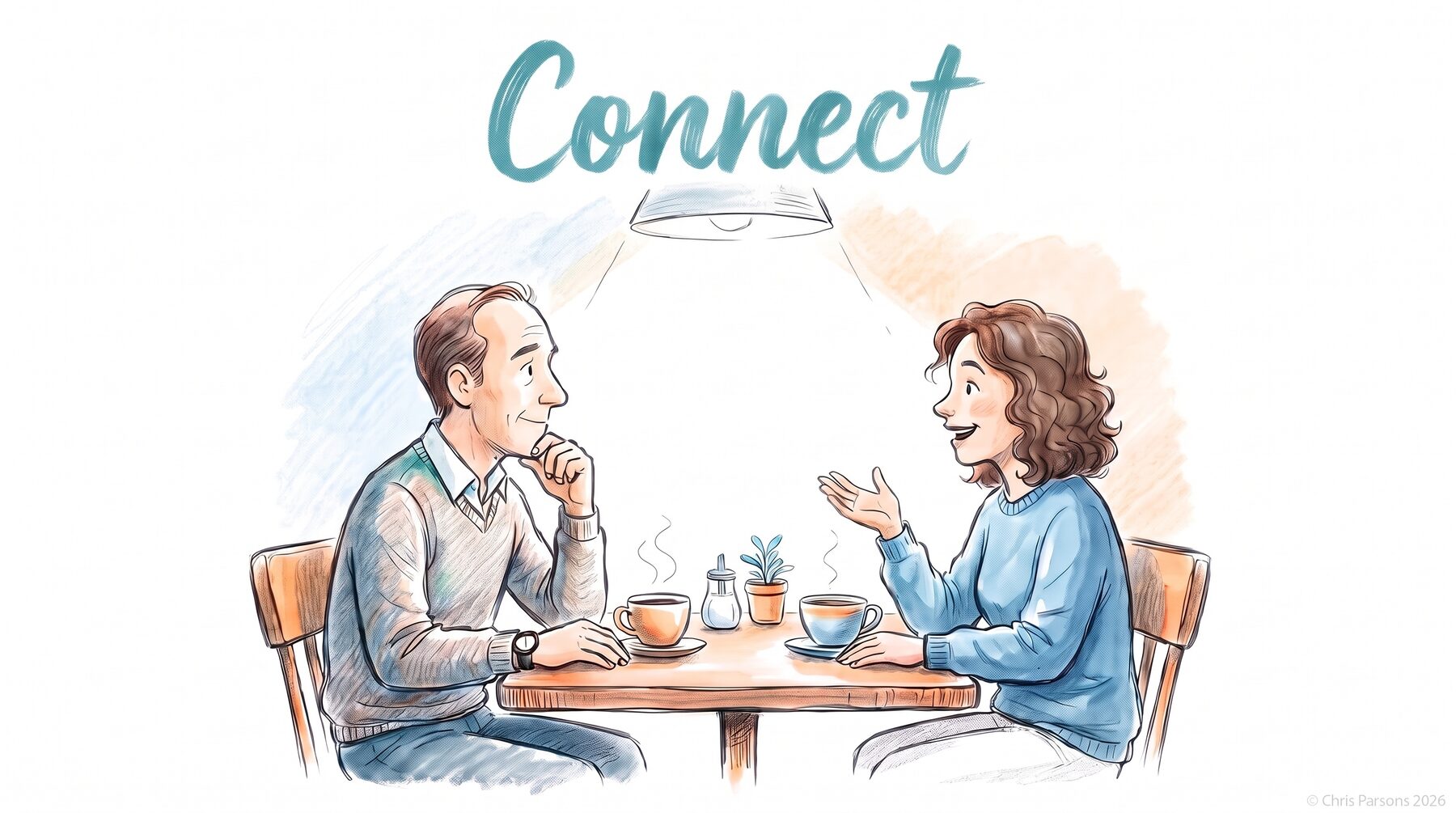
Connect: a manager listening closely to a colleague over coffee at a small café table.
Drawing of Chris Parsons

Chris Parsons

AI Skills And Strategy for Leaders and Organisations

Find me at Speakers' Corner straight after
QR code for chrismdp.com/connect: LinkedIn, X and Bluesky

Shortcuts. They work in either window, and both windows move together.

  • → Space PageDown next step, or next slide
  • ← PageUp back a step, or previous slide
  • Shift+→ / Shift+← skip the steps: jump a whole slide
  • Home first slide · End last slide
  • Type a number, then Enter: go to that slide
  • Esc clear a number you are typing, or leave fullscreen
  • P switch this window between notes and slides
  • N open the notes window
  • ? show or hide this help
  • F fullscreen: hide the top bar and footer
  • D switch between deck and one long page
  • Reload either window and the other reloads too
  • Click a picture below to go to that slide

© Chris Parsons

? help

→ ← next / back · Shift+→ skip to next slide · N notes window · ? help · F fullscreen · D switch view · Home go to start