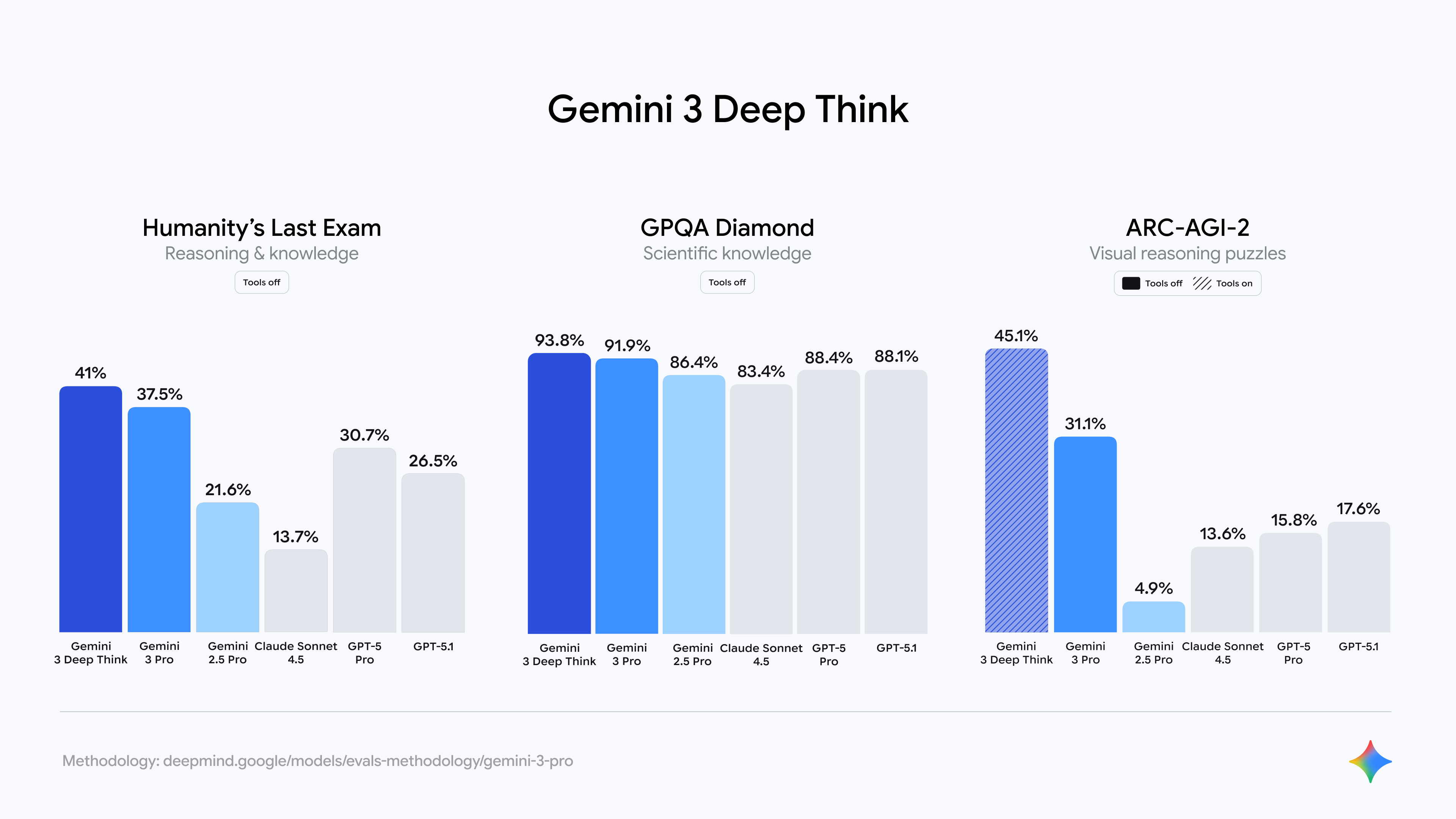
Gemini 3 is out. The benchmarks are genuinely incredible. But it’s hard to know what to do about it.
41% on HLE. 45% on ARC-AGI-2. These are colossal achievements. But it feels like more of the same. Another week, another frontier model. OpenAI, Anthropic, Google - they’re all leapfrogging each other every month.1
We’ve got release blindness because the pace is relentless. Another week, another set of impressive numbers. Traditional benchmarks measure performance on maths problems, coding challenges, and academic exams. Easy to track, easy to compare. Each generation scores higher than the last. It can feel like the pace of improvement is slowing as benchmarks saturate (it isn’t).
But benchmarks are not important. Does the new model translate into real-world performance for your organisation? Most people won’t know because they’re running AI without proper evaluation. They’re using vibes and anecdotes. That’s not good enough anymore.
Here are two ways to know whether a model is better: not just for the world, but for you.
Benchmarks that matter: GDPval and METR
GDPval and METR benchmarks are a much better standard for whether a model is actually useful.
GDPval measures performance on actual economic tasks across 44 occupations. These aren’t simple text prompts - they come with real files, real context, and expect deliverables spanning documents, slides, diagrams, spreadsheets, and multimedia. The evaluation uses head-to-head comparison with industry professionals who have an average of 14 years of experience.
The findings are striking: frontier models can complete GDPval tasks approximately 100 times faster and 100 times cheaper than human industry experts, with quality approaching professional standards.2
METR tests autonomous agent capabilities on complex, long-running tasks in machine learning engineering, cybersecurity, and software engineering. These tasks take human professionals between one minute and 8+ hours to complete.
The key metric is time-horizon: the length of tasks that AI agents can complete autonomously with 50% reliability. This has been doubling approximately every seven months for the last six years. AI agents are improving rapidly at autonomous software development and machine learning tasks.3
GDPval and METR tell you whether AI can actually do the work, not just score well on tests.
But we don’t have that data yet for Gemini 3.
What to Do About Gemini 3 (And The Model After That)
Whilst we wait for proper evaluation data, your response depends on how you’re using AI.
If You Build AI Into Products
Run your evals. See how good Gemini 3 is for your use case specifically. If you don’t have evals yet, build them now.
Testing AI is not like testing regular code. The outputs are not deterministic. Evaluations score outputs based on criteria rather than checking for exact matches. Did the model understand the task? Was the response useful? Did it avoid common failure modes?
I built Kaijo specifically for this. You need a way to systematically evaluate AI performance on tasks that matter for your business. Bring some examples, or generate them with AI. Let the evaluation system handle the rest - continuously testing and optimising your AI functions against real criteria.
Without evals, you’re flying blind. You can’t tell if Gemini 3 is actually better for your use case or just better at benchmarks that don’t matter to you. AI’s consistent mediocrity means you need systematic evaluation, not gut feel.
If You Use AI for Productivity
Get your early adopters testing. Give them access to Gemini 3 and Antigravity.4 Have them run typical tasks side by side with current tools. Get them reporting findings in lunch-and-learn sessions.
If you don’t have an early adopter group yet, create one now. Set them up for systematic exploration with shared learning.
If You Have Neither Evals Nor Early Adopters
Start building your internal AI platform now. Without proper evaluation infrastructure, you won’t know whether Gemini 3, GPT-6, Claude 5, or whatever comes next month actually helps your organisation.
The releases won’t stop. The benchmarks will keep climbing. The organisations reacting fast are those that can systematically evaluate whether new capabilities translate to real value for the specific tasks and workflows that matter to them.
The Bitter Lesson for Frontier Model Testing
Finally, you need to stretch the models into new territory. There is a deeper principle at work here, one that explains why testing new models matters so much: The Bitter Lesson.
Rich Sutton’s influential 2019 essay argues that general methods leveraging computation ultimately beat hand-crafted approaches.5 Chess programs conquered grandmasters not through elegant strategy encoding, but through massive search. Go programs won through learning and computation, not mimicking human intuition.
The pattern repeats across 70 years of AI research. Researchers build in what they think intelligence requires. It helps short term. Then it plateaus. Breakthrough progress arrives when someone throws more compute at simpler, more general methods.
This has a crucial implication for how you test frontier models: do not run your current workflow. Try something you think is impossible.
Most organisations test whether the new model is 5% better at existing tasks. They run the same prompts, the same workflows, the same constraints they built for the previous generation. That misses the point entirely.
Give the new model a task where you expect it to fail. Something bigger. Something you would never try with the previous generation.
If the bitter lesson is correct (and 70 years of evidence says it is), the new model might succeed precisely because you are not constraining it with your assumptions about what AI can do.
Test whether your workflow needs to change because the model is fundamentally more capable. That is the difference between incremental improvement and capability breakthrough.
-
Case in point: whilst writing this post, OpenAI announced GPT-5.1-Codex-Max on November 19th, the day after Gemini 3. Release blindness intensifies. ↩
-
See Measuring the performance of our models on real-world tasks. GDPval evaluation framework showing frontier models approaching expert quality. ↩
-
See Measuring AI Ability to Complete Long Tasks. Blog post introducing time-horizon measurement showing exponential growth in task completion capability. ↩
-
Google’s new Antigravity IDE is their fork of Visual Studio Code with agentic capabilities baked in. Agents work across the editor, terminal, and browser. It’s available now on Mac, Windows, and Linux, using Gemini 3, Gemini 2.5 Computer Use, and Nano Banana models. You can even use Anthropic’s Claude Sonnet 4.5 or OpenAI’s models to power the agents. But I suspect we still have a long way to go on interaction paradigms. Typing in files feels out of date, trying to one-shot whole systems allows too much creative freedom, and writing everything down in a spec is a flawed return to waterfall techniques. A creative, iterative process at the architecture level feels like the right direction of travel, and our tools don’t natively support this yet, despite early attempts like Antigravity and Kiro. ↩
-
Rich Sutton, The Bitter Lesson (2019). Sutton argues that 70 years of AI research shows general methods that leverage computation scale better than approaches that build in human knowledge. His key insight: “The bitter lesson is that building in how we think we think does not work in the long run.” The essay explains why breakthrough progress in chess, Go, speech recognition, and computer vision came from scaling search and learning rather than encoding expert knowledge. ↩
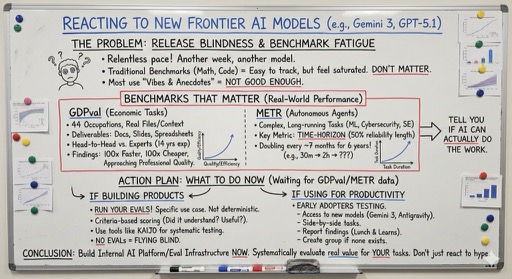
High-res version available to newsletter subscribers