We have all seen the demos: AI appears to one-shot the most incredible things. In November Ethan Mollick asked Claude Fable 5.2 to make “the most impressive thing I can share with people”, and from that single prompt it made a short film, twist ending and all:1
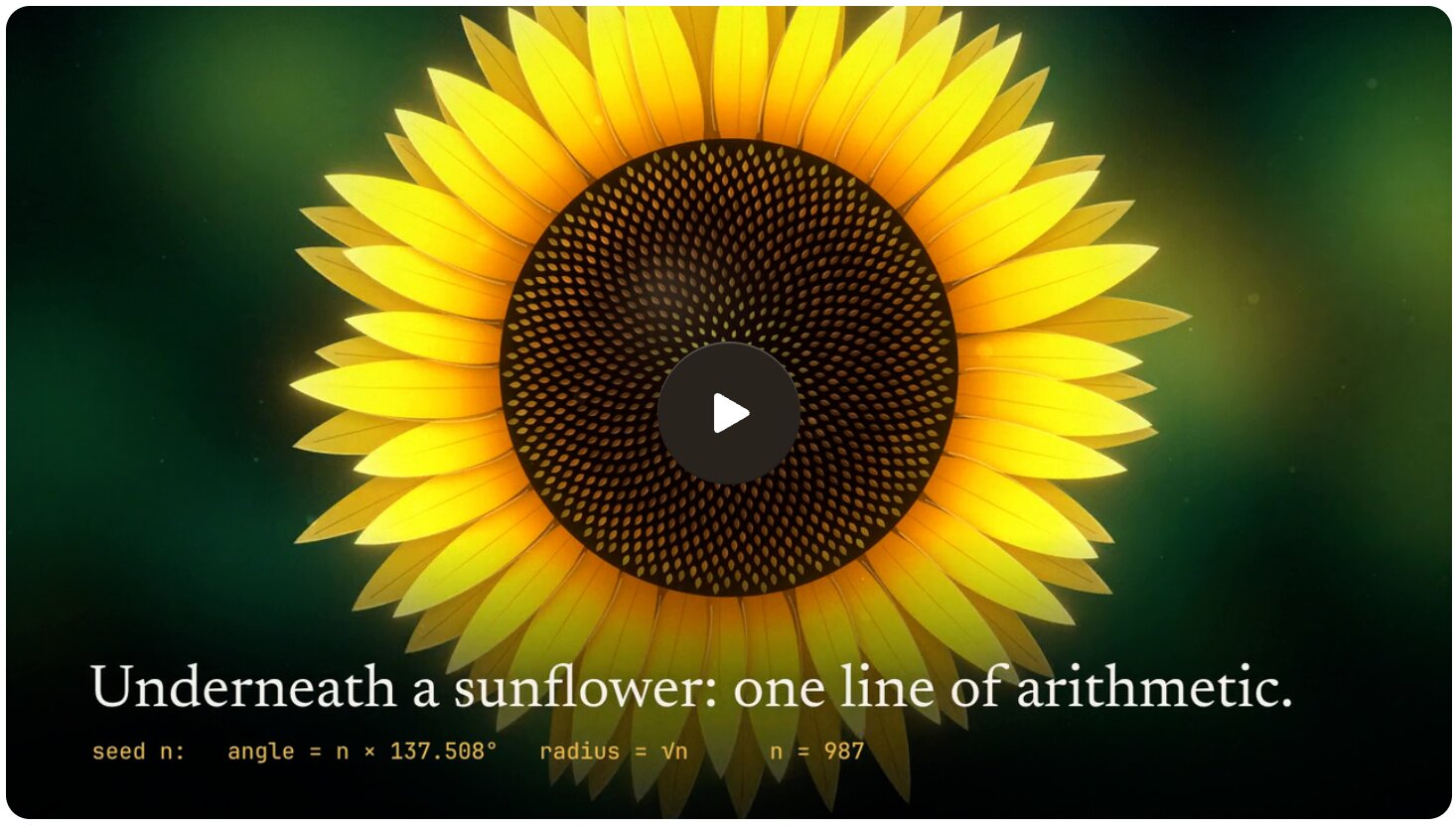
However, my experience is that many people (myself included) struggle to produce things at this level of quality. Why is it so hard to create the thing we want with AI?
I had a frustrating experience with exactly this at a recent training session. We watched the Mollick video together and tried to make something like it. We just could not. Worse, we did not have quite the right words to describe why ours was not any good. The AI was not the problem, and Mollick says as much himself: every one of his projects “happened because I gave the AI an idea”, and on the longer ones his “feedback along the way turned out to matter a lot”.1
Many of us who use AI every day are reaching similar ceilings. We can produce a lot of stuff, but plenty of it is not useful, or does not quite hit the mark for ourselves or for others. It is easy to ask AI to create something cool, like the film above, in one shot, when we do not much mind what the output ends up being and are happy for the AI to make the creative decisions. It is much, much harder to direct it to create a thing exactly the way you want, at the same level of quality. I have written a few games and products myself that did not need to exist, and were only average. Were they average because the AI could not quite produce the right result, or were they average because I need to upgrade myself?
AI Is Now Good Enough
Last year I wrote that AI is consistently mediocre. That is no longer true. Someone who does not know a field can now do above-average work in it with AI.
Our most expert people are often the quickest to dismiss AI, because its output is not as good as their own. Our experience of slop is relative: anything that is not as high quality as what we have seen from others or could produce ourselves feels terrible, and anything we could not produce ourselves is “ushering in an incredible frontier of creativity”. As AI improves, the number of people for whom AI is still producing slop shrinks all the time.
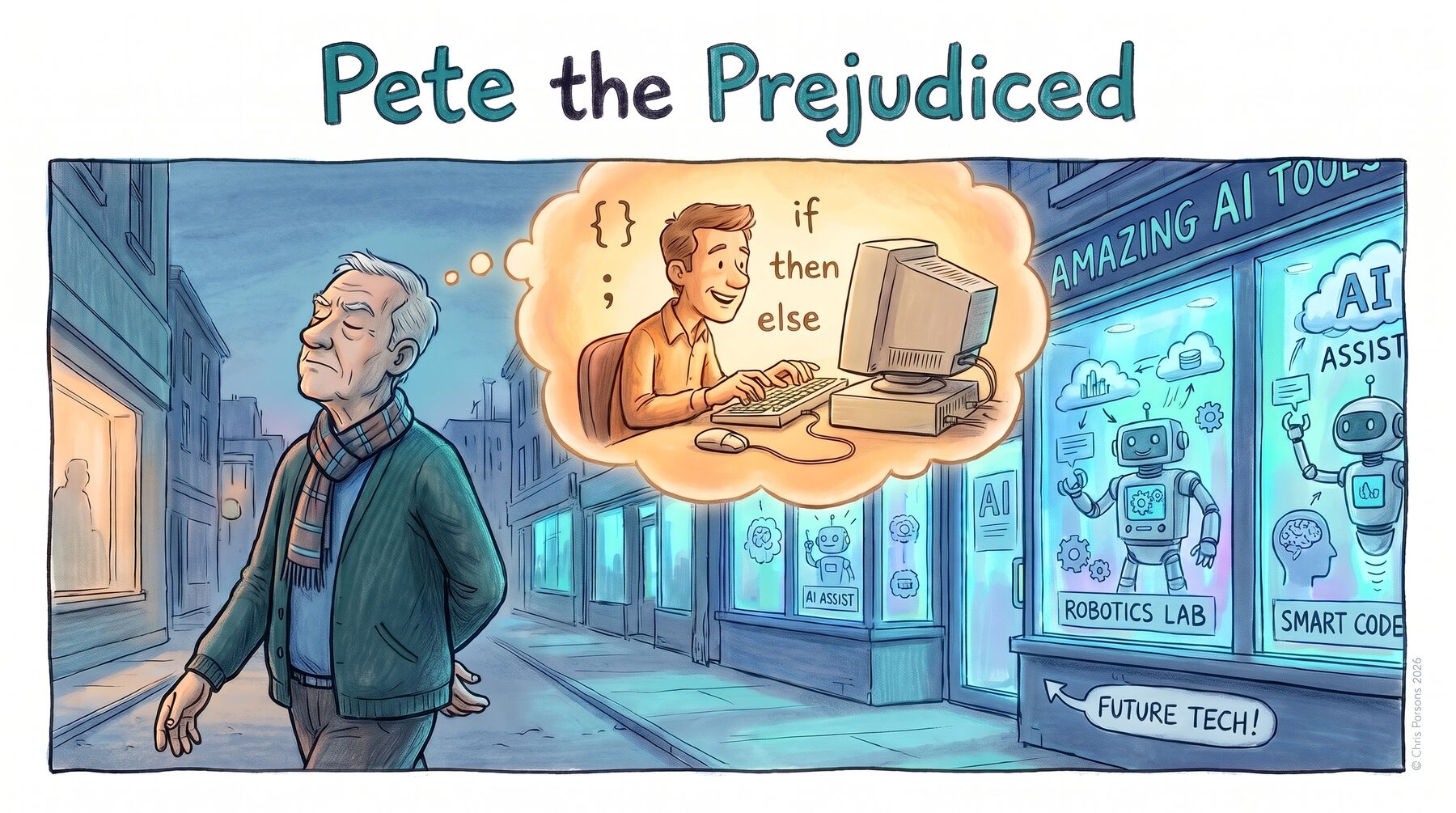 Pete the Prejudiced, from my Øredev talk on the people problems with AI.
For lots of types of work, there is a ceiling of “good enough”. For most code on most projects, the gap between the AI and the expert no longer matters. The code and the architecture are good enough, and plenty of non-coding work is good enough already. Once the bar reaches the point where nobody really cares, good enough is fine.
In plenty of other fields, “good enough” still feels out of reach. For example, many AI-built apps have a poor product experience, yet the model could build a better one if someone knew what to ask for. Any creative expression has much higher ceilings. Think of a Hollywood film: the bar there is really high, and Netflix has pushed the bar for TV show quality up massively in the last few years (go back and watch TV from 20 or 30 years ago and you will see what I mean). Where “good enough” means standing out from the crowd, the bar keeps rising, because more and more gets made, by AI and by everyone else. That is why we have seen an explosion of little businesses, app store submissions and fan video edits, but not an explosion of great apps or great films. That is not down to the AI. We have seen it produce realistic audio, video and images. What we have not seen is someone getting the right video and images out of it.
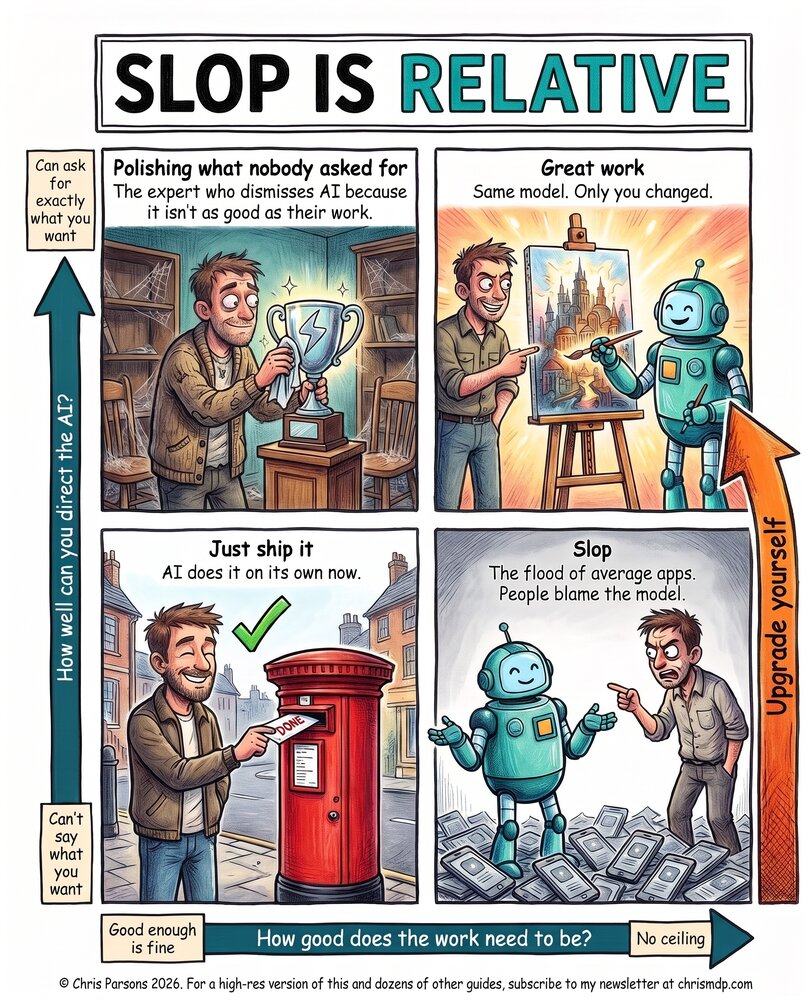
So the AI can do the work now. What limits us is what we ask it for, and whether we can tell when the answer is right. How do we do great work with it?
What Limits Us Now
AI is more of an unlocker than an accelerant. The return on it will disproportionately come from the work it makes possible, not from the hours it saves on work we already do.
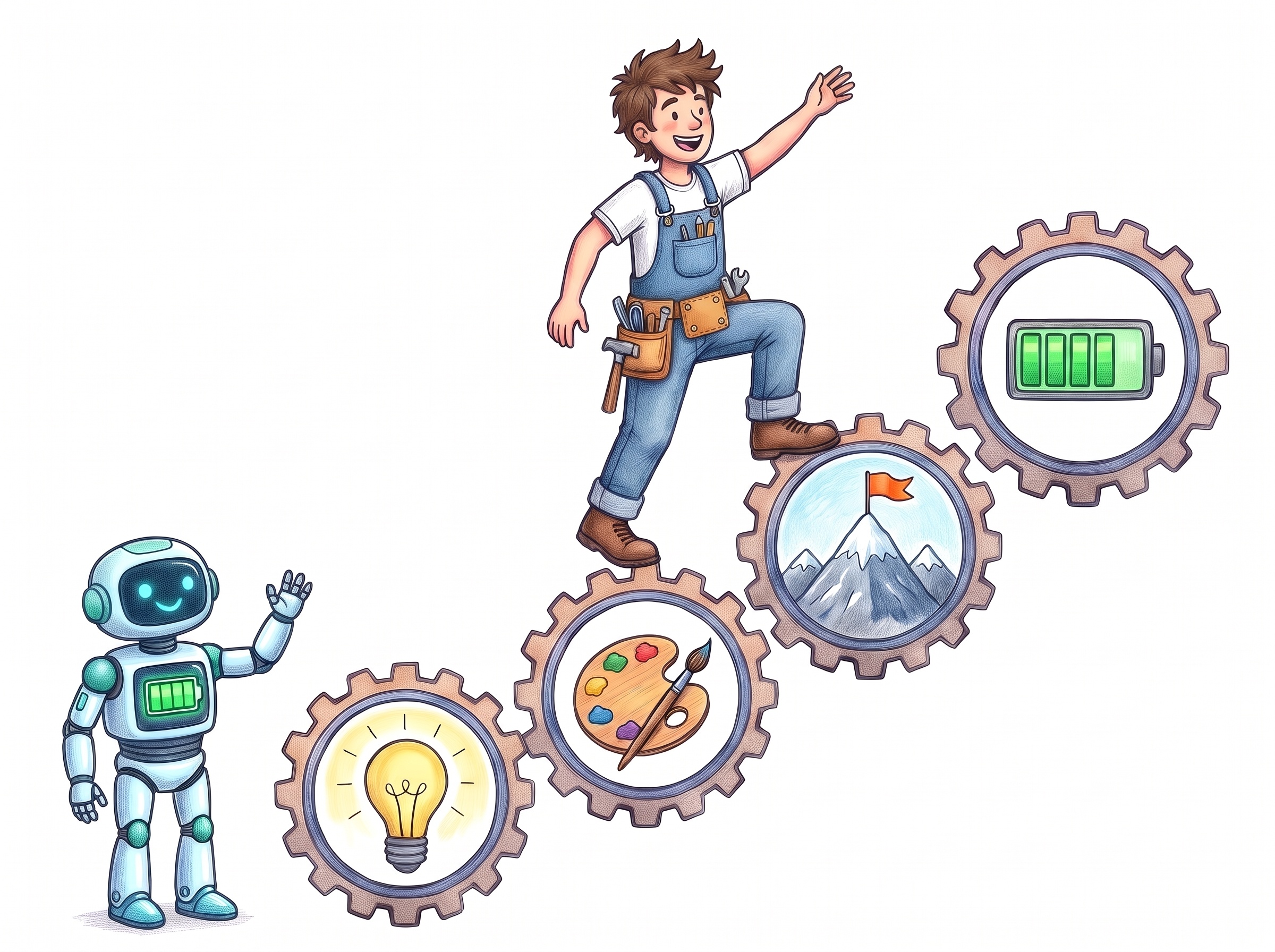
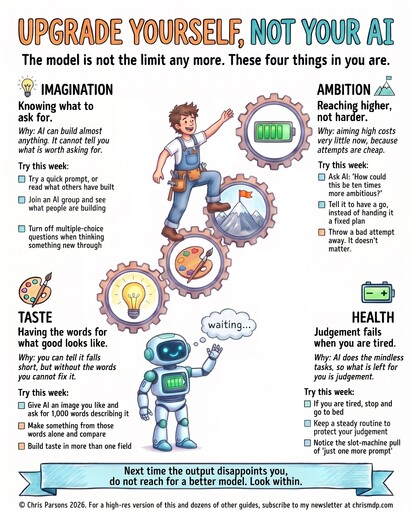
When we work with others, the limit is often our ability to communicate with them. When we work on our own with AI, the limit is ourselves. I currently think about four limitations we can upgrade in ourselves to produce great AI output.
Imagination
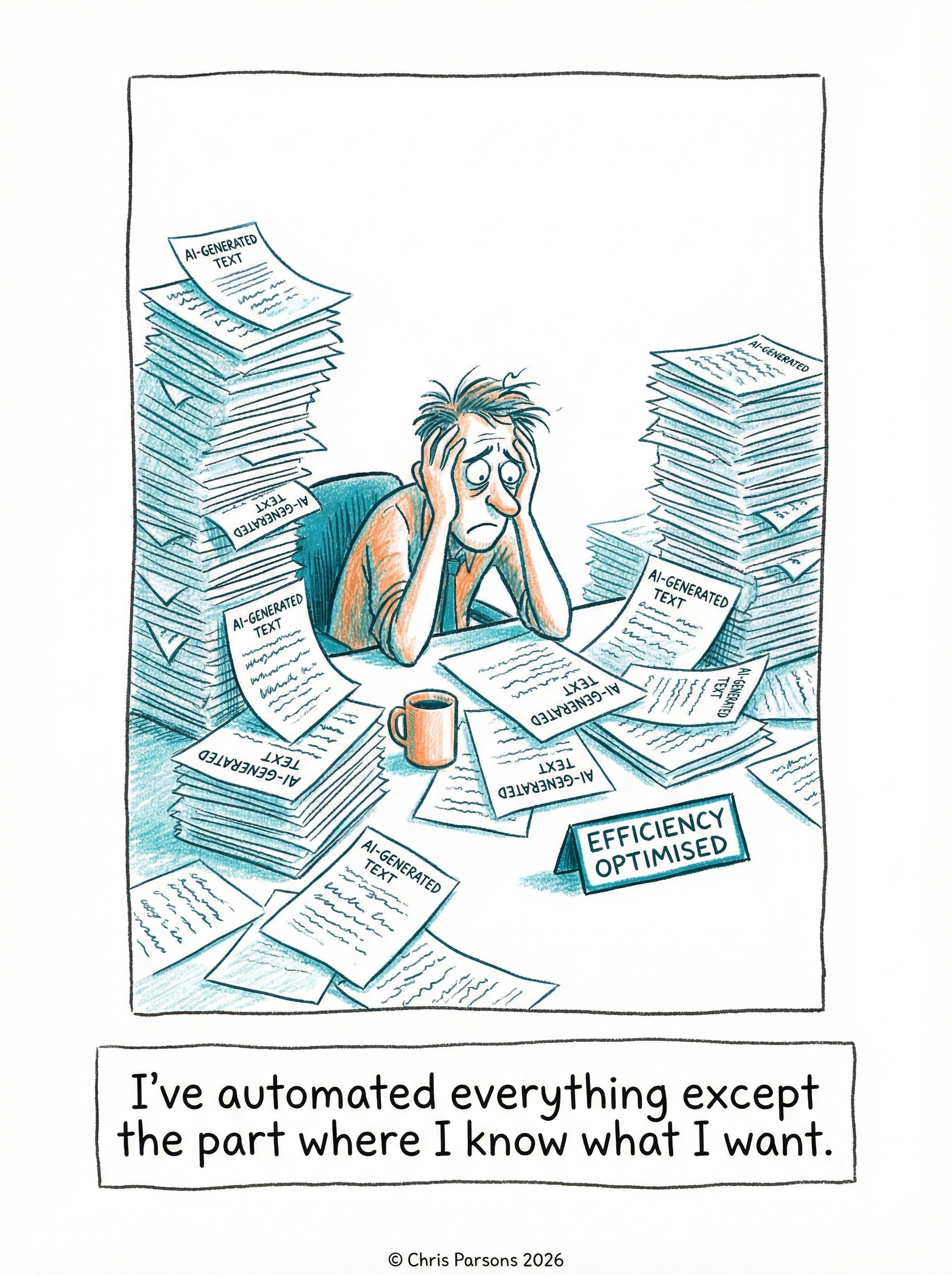
AI can build almost anything we ask for, but it cannot tell us what is worth asking for, or what it can achieve for us. Earlier this year I noticed something similar with my own agents: they were finishing work faster than I could think of the next thing to give them.
But imagination is not fixed. As soon as we try something with a quick prompt, or read about something someone else has built, our imagination expands. Someone has used AI to rebuild the whole Earth in Minecraft, at full scale.2 Andrej Karpathy shared another:
Andrej Karpathy on X
This one is easy to solve. Read around. See what other people are doing, watch their videos, get into AI groups on WhatsApp, and understand what people are achieving with AI, so you can work out how to do it yourself. Sometimes it is just a question of knowing what is even possible.
Be careful that AI does not narrow your imagination for you. When I write with AI, I turn off its multiple-choice questions. For an article about something fairly novel, options like “do you mean this, this or this?” cut my thinking short. I want to ramble a bit more before I get to the right answer. This post came out of that kind of rambling, and it took me to places I was not expecting. That will not happen if the AI is directing our thinking.
Ambition
Ambition is reaching higher, not harder. It means solving a bigger version of the problem, not spending more hours on the one in front of you. Tara Seshan, who leads Codex and ChatGPT Work at OpenAI, argues that ambition is now the differentiator.3 Since hearing her, I keep asking AI one question: “How could this be ten times more ambitious?”
It normally flips the script on me: “Why can’t this be done in two weeks? Why do you need all of that? Why can’t you start getting value now?” Or it pushes the idea out to a wider audience, and solves a bigger problem than I could ever have dreamed of. If you give it too many fixed ideas of what the result should look like, it will just do the same thing again. If you tell it to have a go, it can produce some really cool stuff.
Aiming high costs very little now, because artifacts are really cheap to make. The mindset to build is curious and experimental: “Oh, that was terrible, throw it away. It doesn’t matter.”
Taste
Taste is the gap between vaguely knowing that something could be better, or even thinking it is as good as it could be, and knowing specifically what to ask for to make it better. It is the old competence ladder. First we do not know our output is average. Then we can tell it falls short, but not why. Then we can say exactly what to change. I am often on that middle rung: I can tell instinctively when an AI-built product falls short, but not why. Without the words, I cannot close the gap.
Even Mollick hits this. Fable’s first version of one of his projects was, in his words, “accurate and joyless”, and the AI “did not notice any of these problems itself”.1
Tools like Claude Design will only lift most of us to the average. “What is good design” is still beyond many of us, and AI keeps getting better, which lifts the average every year. If your taste is easily acquired, you will have no work. Today’s impressive output will not stay impressive either. Look at the little labels AI now puts above every heading.4 They look smart this year, and next year everything will have them.
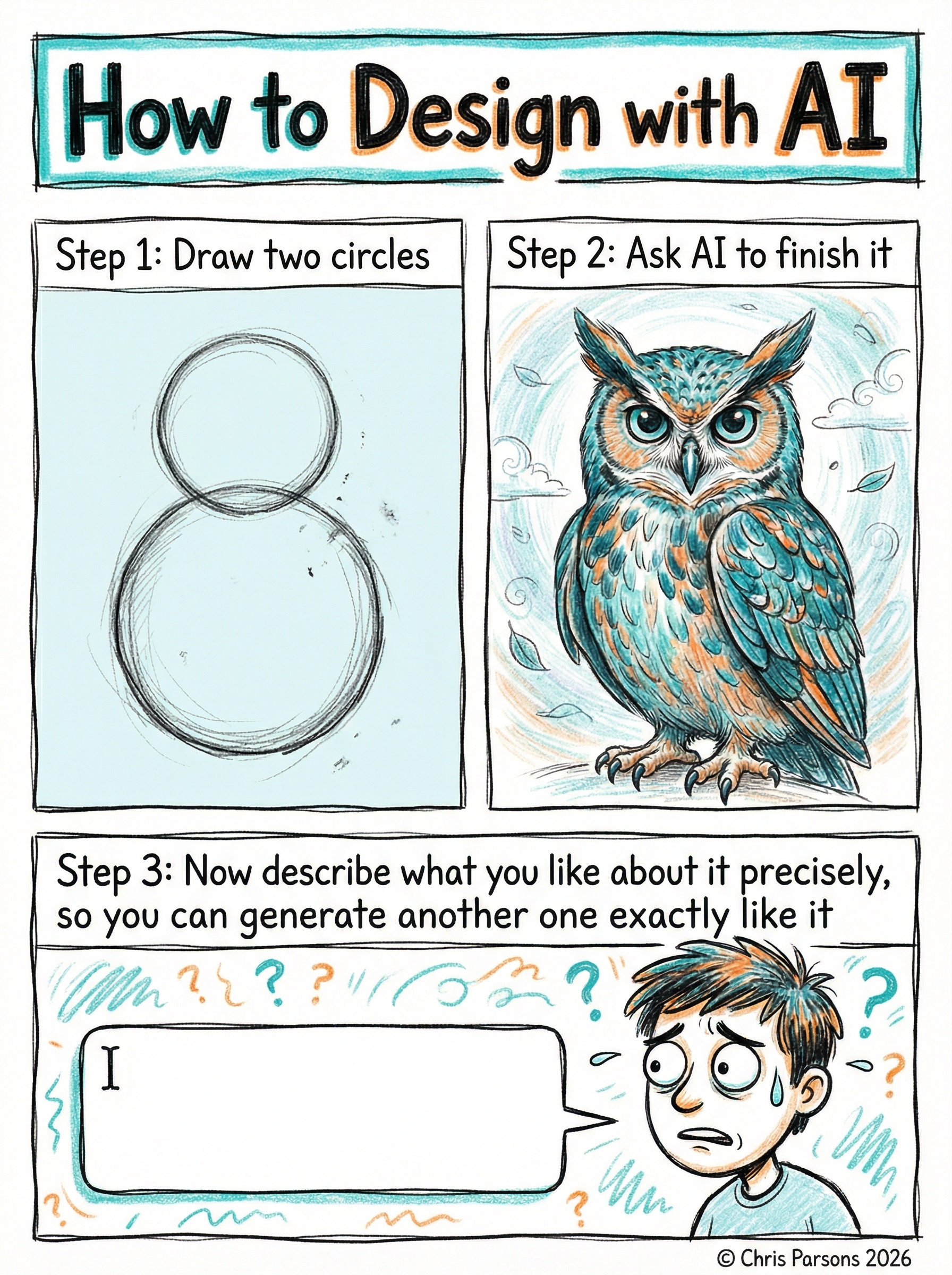
The first step is to accept that your AI output is probably not as good as you think it is. Then the fix is to learn the words to say, and understand more topics at a deeper level. I took a cartoon I loved and asked AI to describe its design style in words, so it could teach me the words for what I was trying to say. It told me it was “a whimsical pencil drawn style”. From there I worked out my brand colours and built a small skill to generate images in that style. This then evolved over time into the skills I use for my infographics and cartoons.
Later, I realised that a lot of my comics were not very funny or very interesting. I needed a really clear understanding of irony, because irony is what I want in my comics as far as possible. My older ones are not as good, but in general the ironic ones do best on social media. So I had to teach the AI about irony. Later models have become much better at it, but I still had to be very specific about the ways I wanted my comics to be ironic.
My daughter finished GCSE art this summer, and I am very proud of her work. Look at how they teach it. She picked artists she liked and wrote down, in her own words, what each one does with colour, texture and line. Then she recreated a piece, stuck a slice of the original next to her copy, and said honestly where hers fell short: “I think I could have created a smoother finish.” That is taste being taught. Study great work, find the words for what makes it great, make your own version and compare.
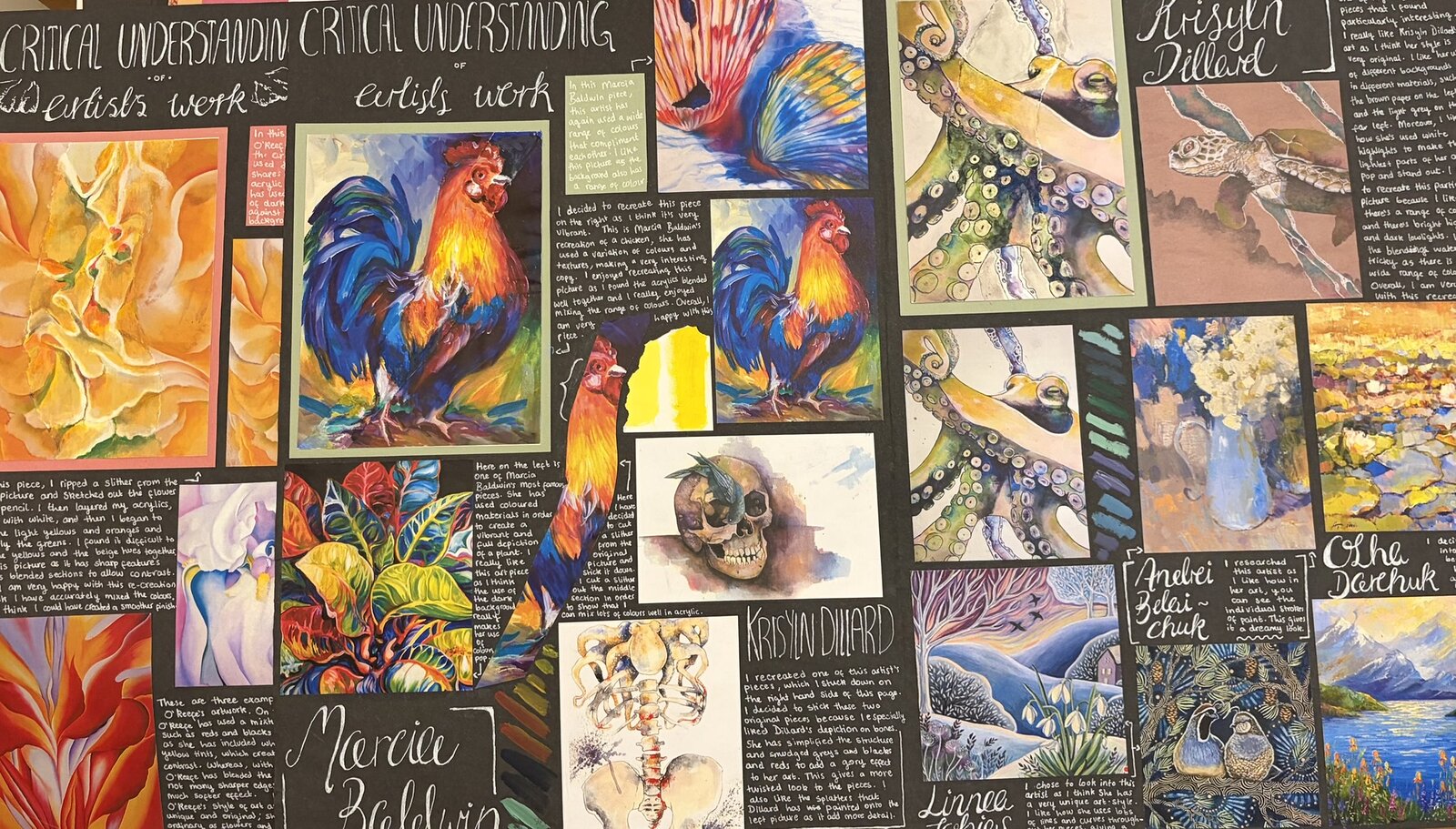 From my daughter's GCSE art sketchbook.
Peter Nixey showed me another trick. A picture is worth a thousand words, so turn that round: give AI an image you like and ask it for a thousand words describing it. Tell it you do not have the words for what you need, and ask it to help you develop your taste.
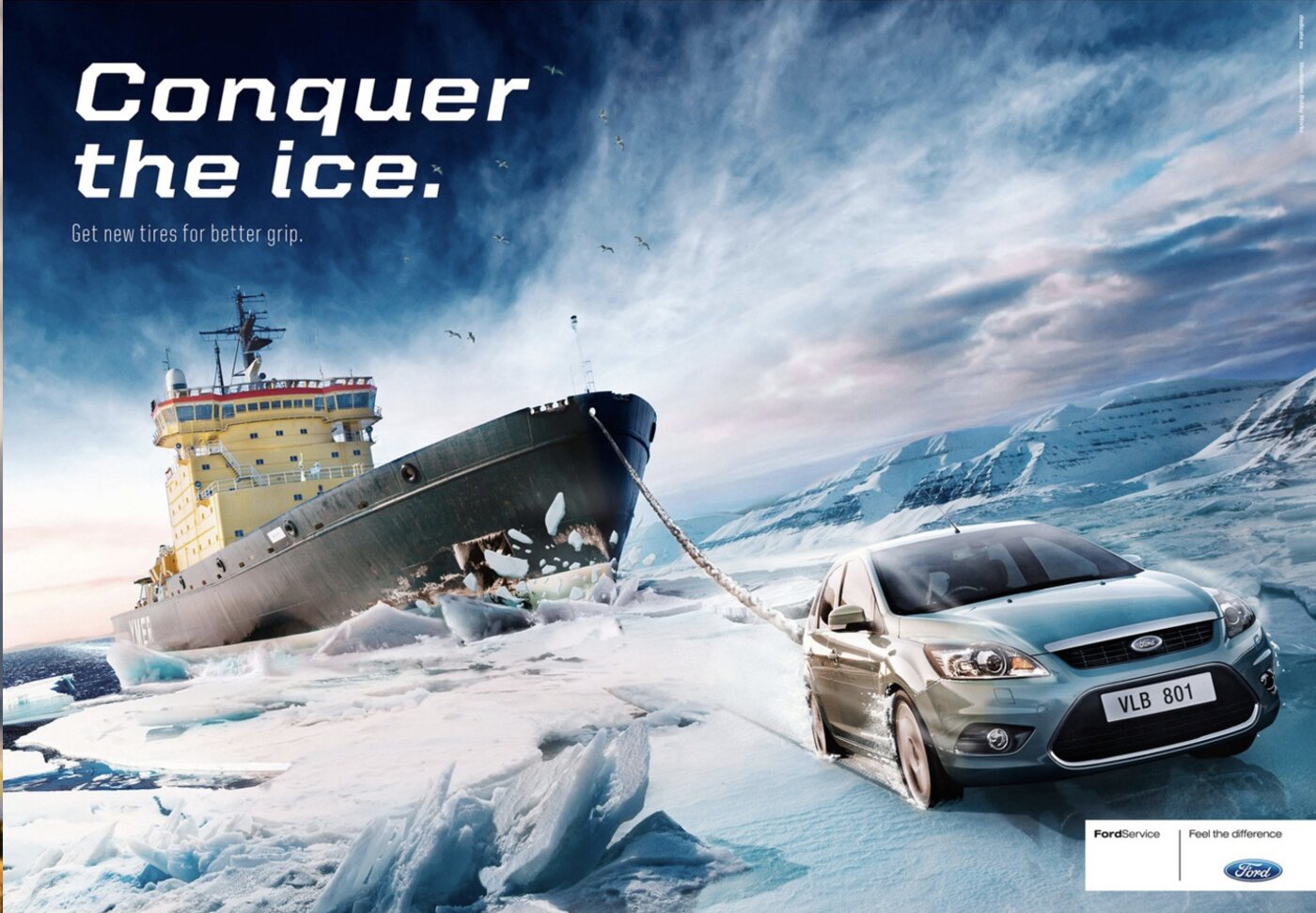
Consider a Ford advert: a small hatchback towing an icebreaker across the Arctic ice, under the headline “Conquer the ice.” I asked AI to “describe this in intricate detail, in about 1,000 words”. It picked out details I would never have pointed out, such as the strong diagonal that runs from the headline, down the rope, to the car. Then I gave AI only the description and asked it to make the image. Look how much of the taste came through: the diagonal, the rope, the joke about scale. It got the rope wrong, though: no car could pull a ship like that, so there is still some way to go! The words carry the taste, and once you have them you can ask for exactly what you want, whether that is an image, a document or a deck.

Taste also lets us cross boundaries. In Nexus, Yuval Noah Harari describes bureaucracy as a set of fixed drawers.5 Sorting the mess of reality into drawers keeps order, but at the expense of accuracy. Universities split history, biology and maths, even though a pandemic is all three, and “academic bureaucracy doesn’t encourage such a holistic approach.” The drawers existed because humans could not handle the mess. AI can. If you build taste in more than one area, you can now do joined-up work the old structure never allowed.
Your audience has taste too. Your job is to have more than they do, and then you will get to “good enough”. One recent workshop participant told us her children refused T-shirts because they looked “too AI”. Another had been fooled by AI fashion influencer videos until her daughter spotted them. I work with this stuff every day, and I cannot always spot it either. But people notice the average, and they reject it. We must develop our taste to raise our own bar, and beat the average.
Health
Once you have made progress on those three, you might hit a fourth. AI now does most of my mindless tasks, so the work left for me is judgement, and a lot of it is nuanced creative judgement. If you are tired, you will not be able to make these judgements nearly as well.
When people save fifteen hours with AI, they seem to tend towards: “I’ll do more work.” And then they are exhausted. Prompting pays out at random, like Instagram or a slot machine. You never know whether the next prompt will produce something brilliant, so you keep pulling the lever.
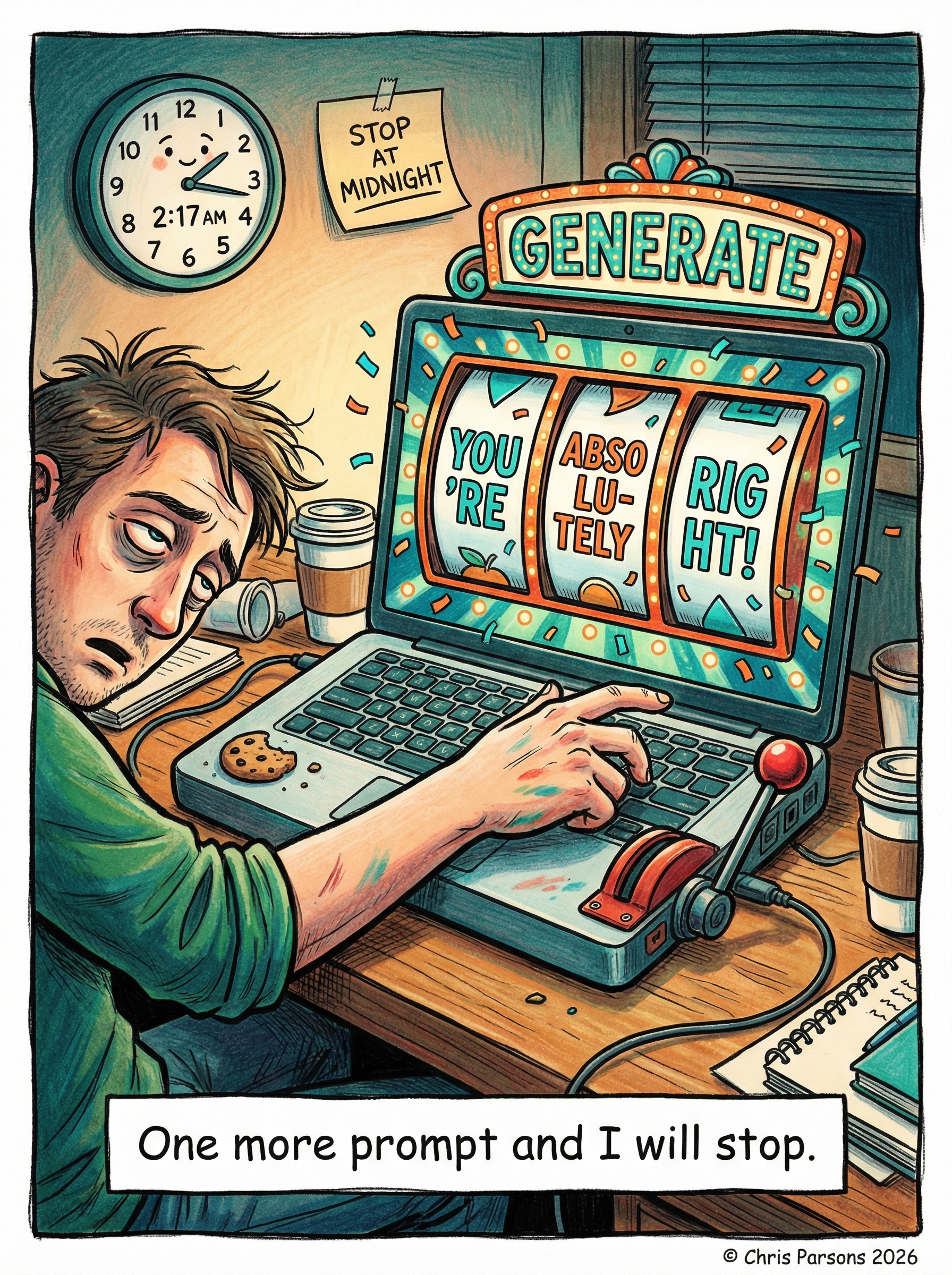
The excitement of AI is what keeps me up. I have woken at 4am to catch the next prompt window, and prompted constantly from waking up to (fitful) sleep. But all I end up making is slop, because my judgement drops.
Top CEOs and athletes keep routinised lives to protect their ability to make great decisions. With AI, we need to stay physically and mentally fit for the same reason.
Phil Hewinson told me he now works in 90-minute blocks and goes for three walks a day, to give himself the space to think about the future. I have started going to the gym on Monday and Friday mornings with my wife, Ellie. It is an excellent chance to exercise, and to think about the start of my week and the end of it. It resets me, ready for the week or the weekend, and we get to spend time together. Even AI says we should be running at 80%:
Voxyz on X
Where to Start
Next time the output disappoints you, do not immediately reach for a better model. Look within. If you did not know what to ask for, go and look at what other people are building. If you asked for something small, ask how it could be ten times more ambitious. If you could tell it was wrong but not why, give AI something you love and ask for a thousand words on it. And if you are tired, stop and go to bed.
Thanks to Adrian Shedden, Peter Nixey and Phil Hewinson for conversations that shaped this post.
-
Ethan Mollick, Fable 5.2 and Jagged AGI, One Useful Thing, 9 November 2026. ↩ ↩2 ↩3
-
WorldCraft bills itself as “a 1:1 scale replica of Earth in Minecraft”. Its creator says an AI generator built it from map data. ↩
-
Tara Seshan on Lenny’s Podcast: AI’s third era: the rise of persistent AI coworkers. ↩
-
These are called eyebrows. I did not know that until I asked Claude, while I was trying to improve my own design taste. ↩
-
Yuval Noah Harari, Nexus: A Brief History of Information Networks from the Stone Age to AI, chapter 3, “Documents: The Bite of the Paper Tigers”. ↩
High-res version available to newsletter subscribers