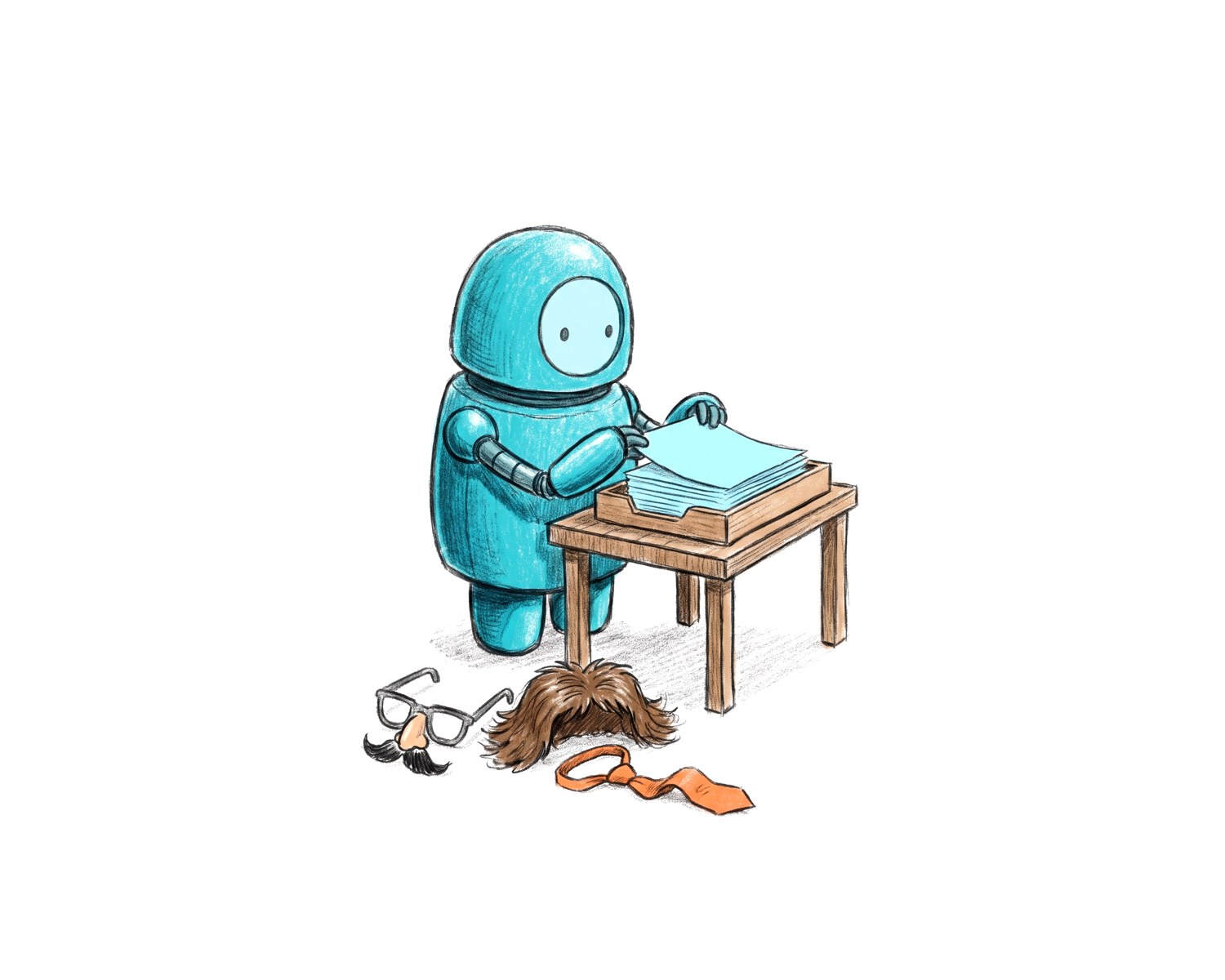
Every week, I try and have a day without meetings. On these days I relish the peace and quiet and try and get some serious experimentation and learning done with AI. I might be building new things, or reading articles, or just clearing the decks to help me focus the rest of the week.
The trouble is, I have found I am spending the whole day talking to bots. Charles does my receipts, Maggie schedules my posts, Miriam asks me what I want to get done today and then checks I have done it. By the evening I feel not just mentally drained, but emotionally drained too. That does not seem like the right response to talking to AI and getting projects done.
I realised I was pretending to have real conversations. It has begun to feel like a poor substitute for talking to people. The situation is rather like remote calls versus meeting in person - we feel like we are interacting directly, but it hits our brains differently.1 I want to reserve my emotional energy for people. I do not want to spend it all talking to bots.
If I struggle to talk to my family because all my emotional energy is gone by the end of the day, AI has made my life worse, not better.
Why I Built A Cast Of Agents
I started building named agents in June, before there were products that did this for you. Each one was a Telegram bot with a name, an avatar and a small job. Charles was my CFO. Maggie was my marketer. Bella was “bot resources”, the HR bot that looks after all the others.
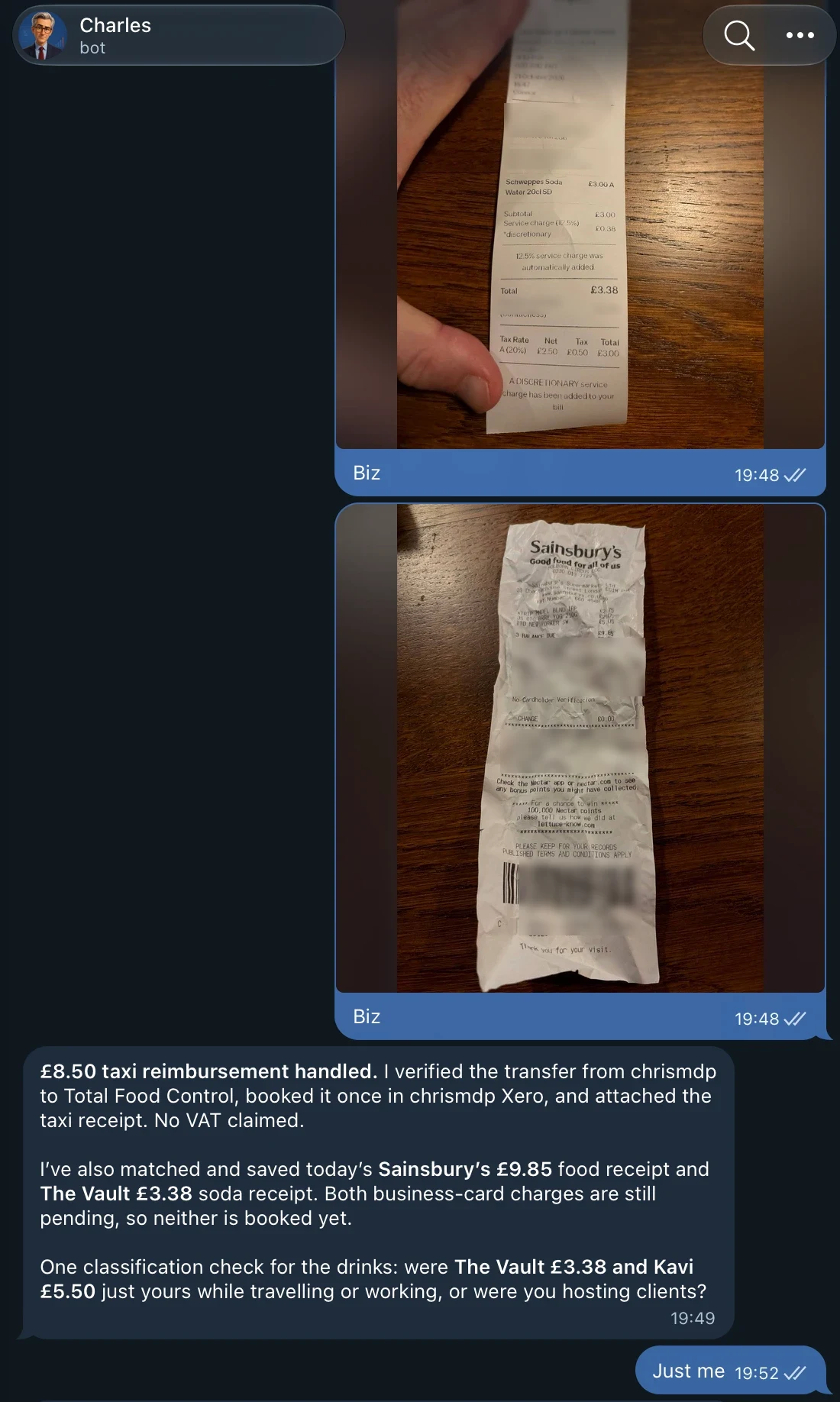
Some of these still work really well. On the bus to Heathrow this week I sent Charles “10 quid travel on this ticket”. He booked it as the wrong thing, I told him so, and he fixed it. That back and forth is useful: when it gets something wrong, you just do another round until it is right, like you would with a person. Each time, I got him to update his own instructions, so he got better and better at matching receipts.
It was also fun. Splitting my work into little bots I talk to one at a time felt familiar, because it is how I already work with people as a leader and manager. We are used to having conversations with employees who each do just a few things. It is easier to reason about and fit into our existing mental models, and it helped me trust the agents and use them more.
This was my answer to the question in I Don’t Want an AI God back in May. One all-knowing assistant tempted me to hand over the thinking I should do myself, so at the time I decided to dismantle my orchestrator in favour of a small army of bounded agents.
I also said I would let you all know whether it held up - and I am not at all sure it was an improvement.
What Naming Bots Cost
Giving bots names, avatars and personalities turned out to have three costs I did not see coming.
-
The work lives and dies with the bot. Unless I went back to the same bot to talk about it, nothing moved. Work did not pass well between bots either: if I had a sales bot and an account management bot, getting a prospect from one to the other took lots of work.
-
Named agents are emotionally hard to fire. It is not at all surprising that most redundancies happen far later than they should: it is emotionally taxing for managers and leaders to let employees go. That should not be the case with agents, but giving them a name and a personality just makes it harder. One of mine should have been let go much earlier, but I did not want the pain of removing her entirely, and my system suffered for it. When I finally retired her, the change touched about 25 files, because I had built the other agents around her being there: they routed work to her, listed her in their rosters and pointed to her in their instructions.
-
Named agents build an echo chamber. A village of agents built from your own notes and your own instructions talks back to you in your own voice, with the internet’s knowledge on top. It is too easy to get lost in a little world of your own creation and never surface again. When I let the bots message each other, I came back to about 300 messages to read. Working with my bots felt like a video game that consumed all my attention and tricked me into thinking I was working. That did weird things to my brain.
That last one worries me most. Social media took off because it felt like connecting with other people, only easier: but it turned out to be a fake version of connection. A named agent is not even connecting you with a person. I am not sure it is any better.
What I Am Trying Now
For now, I have gone back to projects: vertical slices of work that contain at least one task and might run for hours or days. I have used Getting Things Done2 for most of my work for years (I first wrote about it back in 2010!), and I was already running projects in the markdown vault I set up in my Claude Code for Leaders series. These were still running under the hood and helping a number of my bots structure their work. Now they are the visible medium of my work. One nameless AI picks up a project and gets it as far as it can, following the playbook named at the top of the project file, which points to a skill. Here is the top of the project file for this very post:
---
type: project
status: todo
next_action: Edit the draft and pick the title.
playbook: /blog
assignee: chris
---
For a blog post like this one, the skill gathers my earlier notes and posts on the topic, tidies my draft, finds comics and screenshots, makes the infographic, tests the post on simulated readers, checks it for AI slop and writes the LinkedIn post. I write the first draft and do the thinking about the content. The skill describes the work I want it to do, so the agent does not overreach, and that is how I am trying to avoid the AI god problem.
The project is the thing that describes the unit of work, not the bot. I am not emotionally attached to projects, and I close them whenever I want. Work runs straight through one project, from the first email to the follow-up, so nothing needs to be handed over. The AI leaves notes for the next run on the project itself, like a message board, so everything stays up to date. Every project is a folder of files, and some are large - some even have hundreds of tickets inside them (all markdown files). My harness only operates on one project at a time, so I can keep up. These constraints help me see the work!
I still wanted to point my attention at different areas of work, so I did it with stations rather than “employees”. My dashboard is built like a Star Trek bridge (a bit nuts, I know). All my information is in one place: decisions on the Bridge, my day in Navigation, running projects in Operations, email in Comms, and the system itself in Engineering. I talk to it with a microphone button, which dispatches the information to the relevant project. This never confuses me about whether I am talking to a human, and it does not use as much emotional energy.
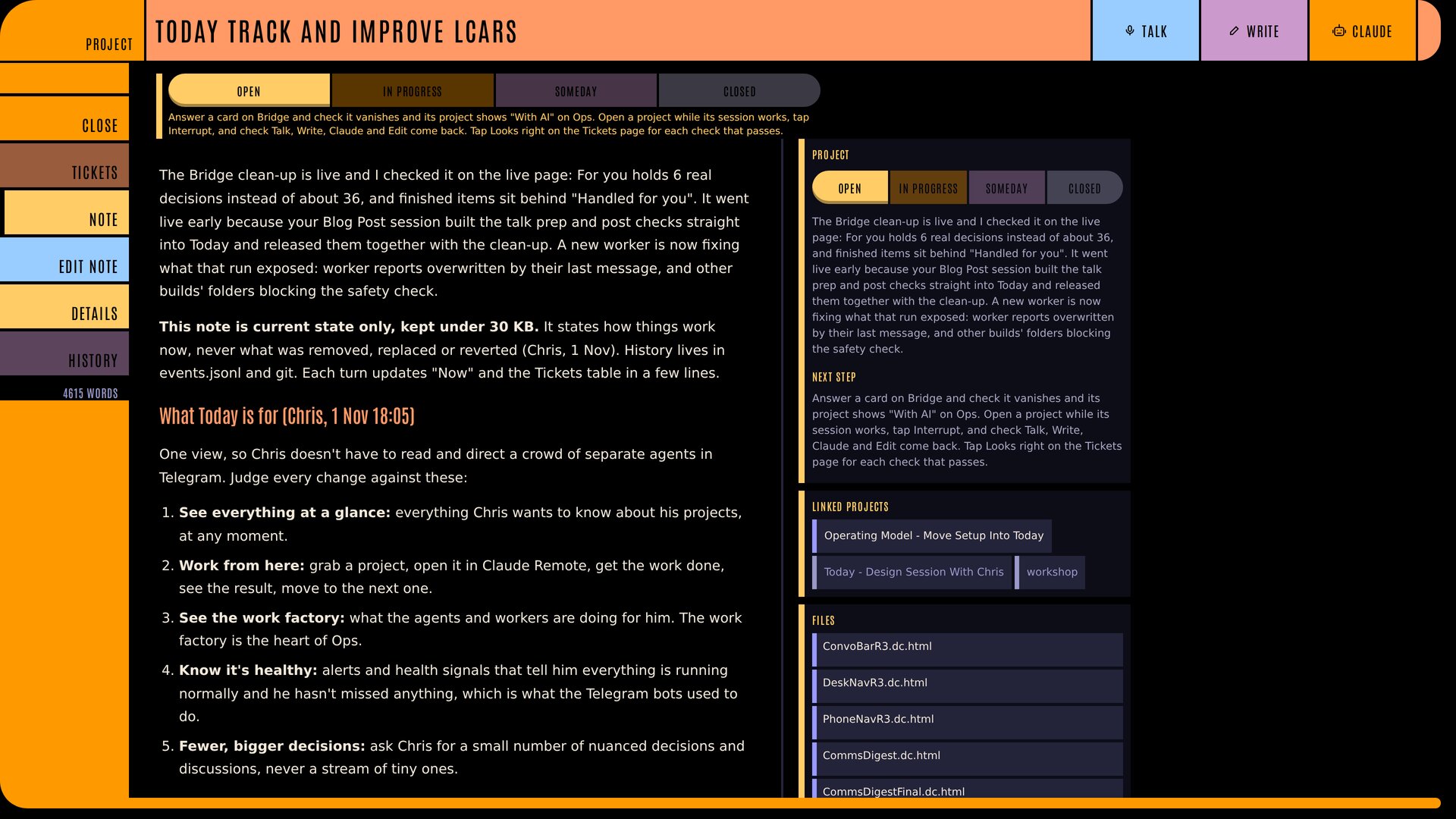 A project open on the desktop: the note, the next step, linked projects and files. This one is the project for the dashboard itself.
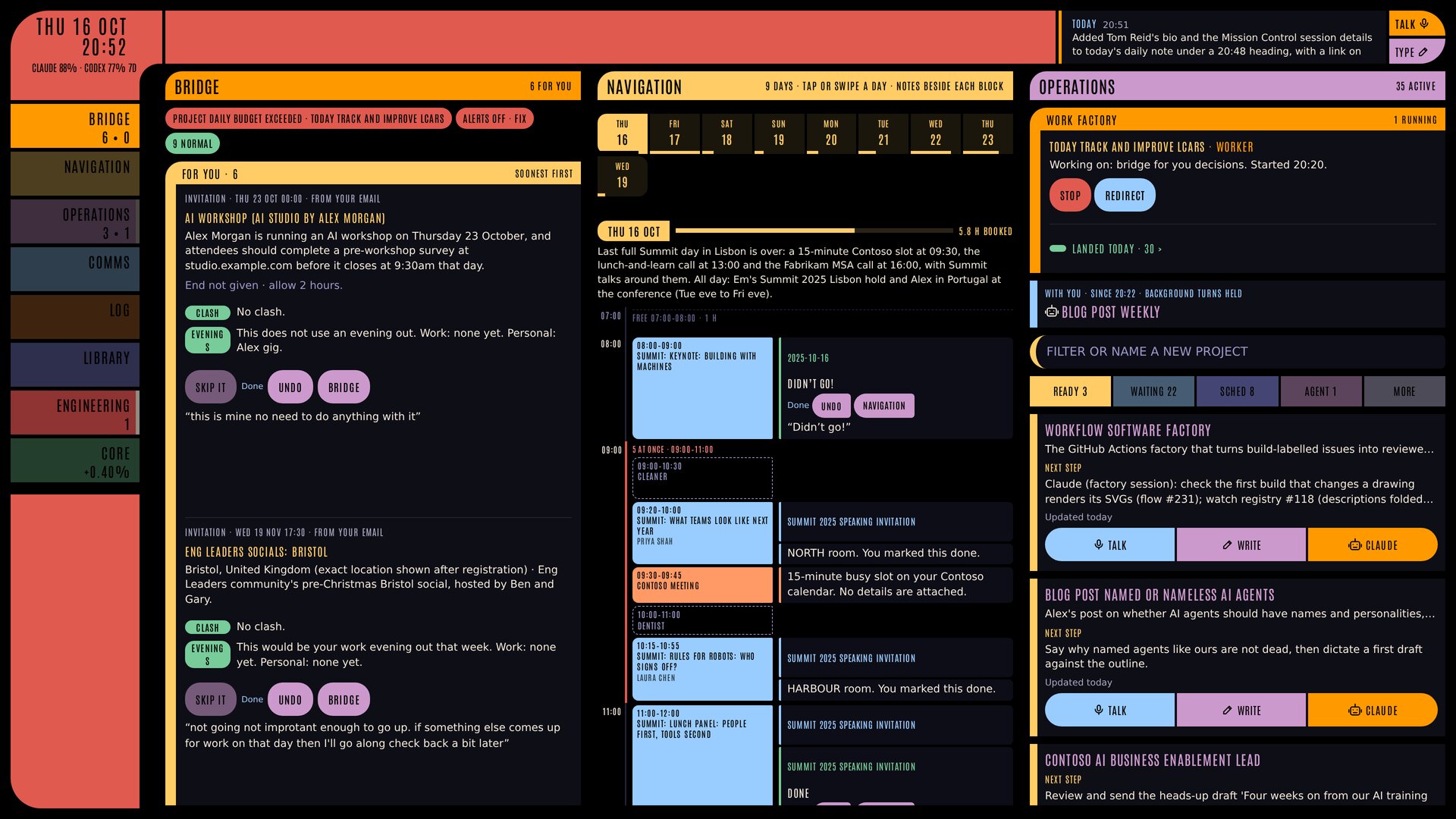 The desktop view: decisions, the day and running projects side by side. (All names and details are invented.)
The boundaries from May have not gone away, and we still need them. They have simply moved from agents to projects. I draw each workflow in AWML, my language for showing where people and AI do the work, and where the data flows.
Named Agents Are Not Dead
Named agents are a really good way in to getting more effective with AI. ChatGPT took off because we anthropomorphised it. Someone using an AI agent for the first time finds it much easier to talk to something that feels a bit like a person. I am not sure that is the right thing to do. Maybe we need to learn, as a society, to relate to AI as it really is. But would we adopt it as fast if we did? Would slower adoption be a problem, outside the need for AI companies to make returns quickly?
I thought differently in the past, I think because it is so easy to imagine AI as little bots. In June I wrote that when a slice of your job grows a boundary, a rhythm and a name, it becomes a colleague. In September I said the employee metaphor mostly breaks in the agent’s favour: you can make an agent forget completely, and you never hire a junior model and promote it. That is still true. But it also means we do not need to treat agents as employees at all.
My guess is that named agents are a transitional step. Technology becomes invisible over time, until you do not think about it at all, and I expect agents to go the same way.
My own product, 27agents, sells named agents: Em handles your email and Miriam is your productivity coach. If that turns out to be the right way to do agents, 27agents will be really popular, but I am not sure it is. Perhaps agents are not people at all. Perhaps they are just inbox, research and finance: everyday projects and pipelines. That is still 27agents, just with a slight pivot, so I want to keep both options open.
Charles is also still running, handling my receipts, but that is more because Telegram makes it extremely easy to send him a photo of a receipt, and I have nothing better yet. I quite like chatting to him. But if I am honest, that just makes me feel good, and I am not sure it is a valid feeling.
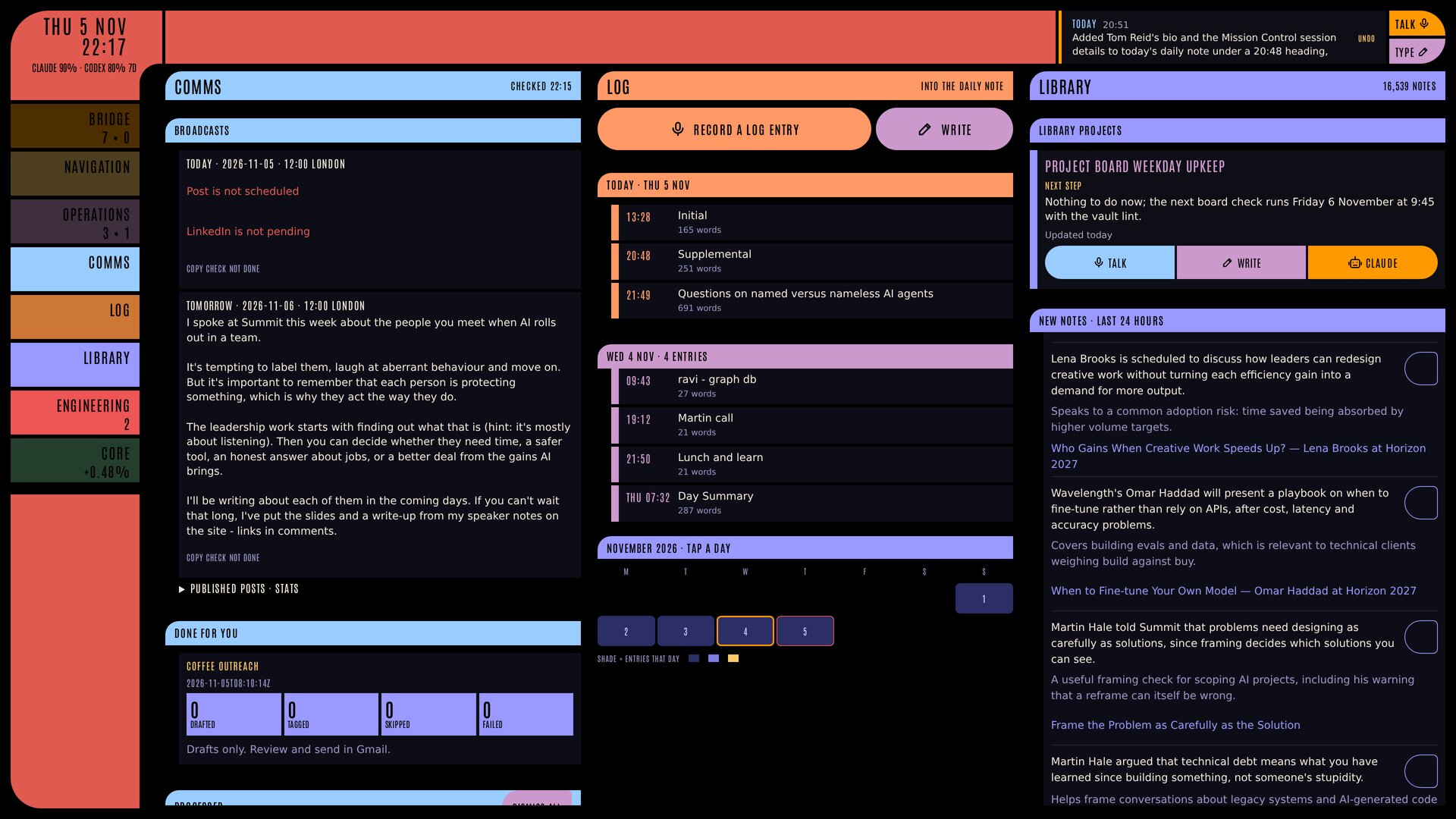 Comms, Log and Library: posts going out, what I logged today and new notes. (All names and details are invented.)
If in six months I am bored, yearning for my old crew and finding it hard to relate to projects, perhaps I will go back. The bigger risk is that my one nameless AI starts doing too much, so I no longer feel in control, and I have built the AI god again by another route. I will need to watch myself carefully here.
Three Open Questions
-
Is treating bots like people bad for us? I have noticed the effects on me, but I am not sure they are harmful. For some people, they certainly will be.
-
Are named bots limiting? Humans are quite limited. We can focus on one thing at once, our conversations stay in our heads, and you do not dispose of us (thankfully!) when the work is done. Does giving an agent a name copy those limits across, and stop us fully understanding how we might organise the work?
-
Is teamwork different? A team has its own organisation, roles and handovers. How does a little cloud of bots fit into that? Do names only help with our own personal work, or is there something else to it?
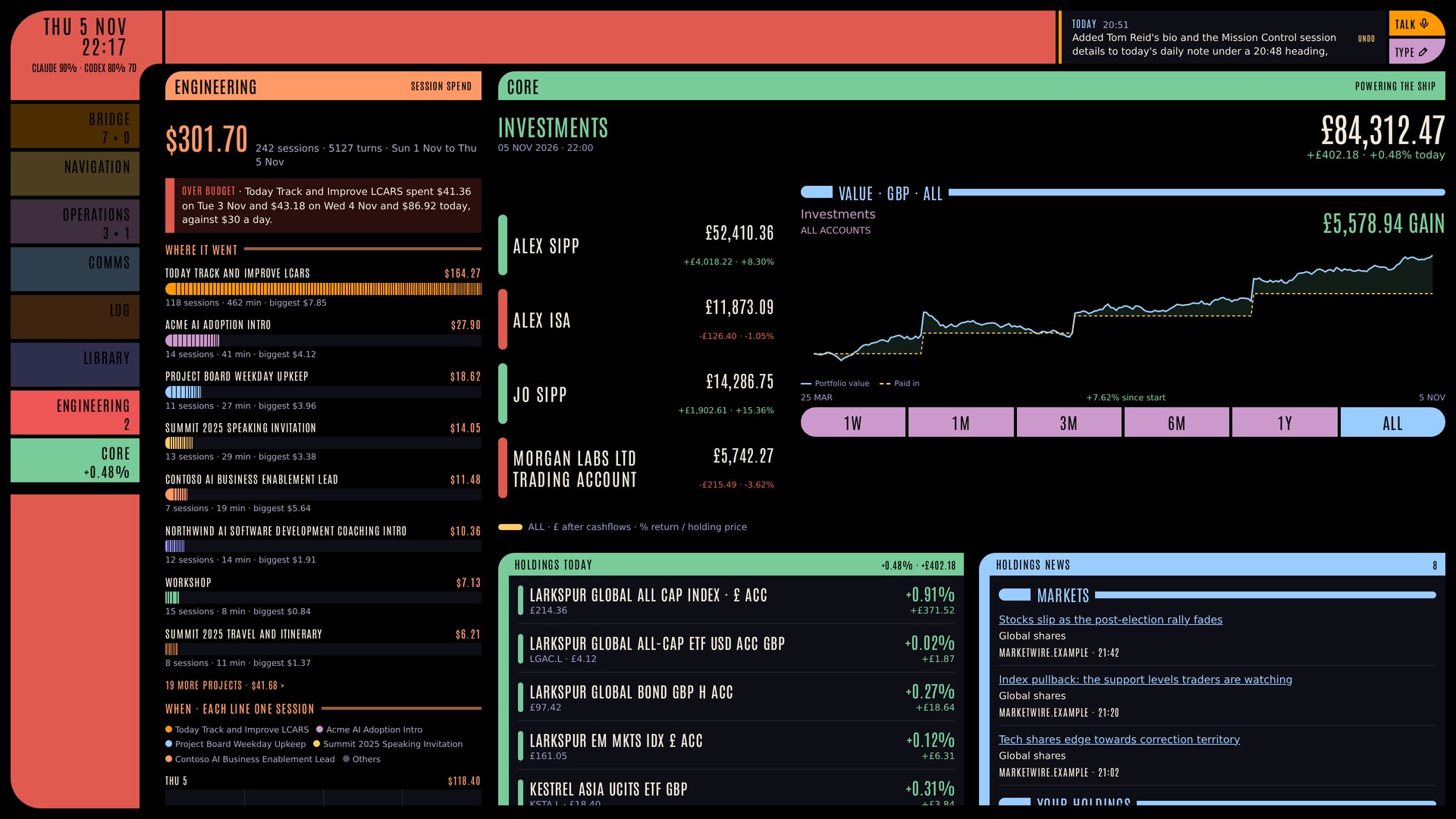 Engineering and Core: what the AI spent by project, and the finances. (All names and numbers are invented.)
Bots are not people - let us relate to them differently, save our energy for real human connection, and stop placing arbitrary limits on how ambitious we can be with them.
-
Nan Zhao, Xian Zhang, J. Adam Noah, Mark Tiede and Joy Hirsch, Separable processes for live “in-person” and live “zoom-like” faces, Imaging Neuroscience, 2023. When pairs of people looked at each other in person rather than over a live video link, they held eye contact for longer, their pupils widened more, the brain areas that read faces were more active and their brain activity fell more into step with each other’s. ↩
-
David Allen’s Getting Things Done method: capture everything into a trusted system, then decide the next action for each item. ↩