Past Talk
This page is based on the slides and speaker notes for my talk at Øredev in Malmö on 4 November 2026. I did not record a transcript. You can see the slides here.
The AI tools work. People have been trained. The strategy has been signed off. Yet many rollouts stall when teams try to change how they actually work. When I went back through my client conversations, the obstacles were rarely about whether the technology could do the job. They were about what the change meant for the people doing it.
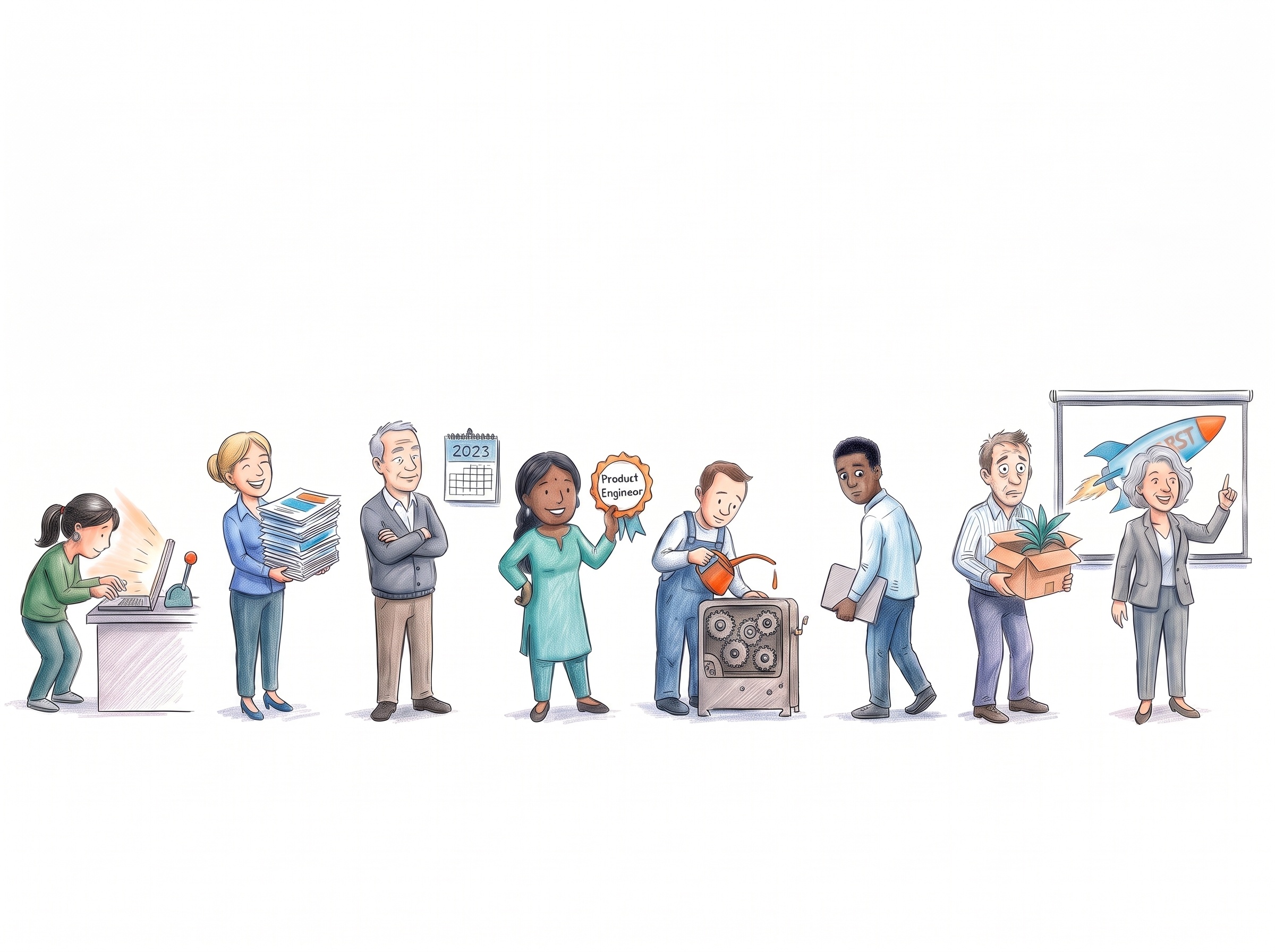
How someone reacts to AI does not tell you whether the tool is good. It tells you what that person is protecting. In the talk, I put eight faces to those reactions. I have been some of them myself.
Eight people to notice
Angela is burning out. She is one of your best people and cannot stop starting another AI session. I recognise this in myself. Check on the health of the people producing the most, and agree what happens to the hours and the gains.
Sinead produces work others have to untangle. A polished document can hide a thought that was never worked through. Ask what its author thinks and how they reached that view. Whoever sends it must stand behind it.
Pete made up his mind too early. He tried AI when it was worse, and he takes pride in the craft now changing. A new benchmark will not address that loss. Give him a peer he respects and a chance to try the tools on real work.
Nadia wants a place in the work ahead. Engineers and product people are both reaching for broader roles. Help them learn from one another instead of treating the job title as the answer.
Marvin is keeping the old system running. The small AI team gets the time and attention while he keeps the lights on. Give every team people who can learn and teach, with protected time to do it.
Theo uses his own AI out of sight. If the approved tool is too hard to use, a ban may hide the work rather than stop it. Offer a safe tool that works, then invite people to show what they have built.
Frank hears a threat to his job. Productivity promises sound different to someone whose team has already faced cuts. Be honest about jobs. Measure teams rather than ranking individuals by AI output.
Victoria sets the AI goal without using it herself. A leader cannot learn the limits of the tools from a dashboard. Use AI on your own real work before asking everybody else to change. I see some Victoria in all of us.
These are characters for discussion, not labels to pin on colleagues. The point is to find out what a person is protecting and what you can change for them.
Three things leaders can do
Make room for grief. Work that gave someone pride may have changed underneath them. Listen to that before making the productivity case.
Raise the bar together. Help people build ambition, imagination and taste. Show each other what good work looks like now, including when to stop using AI.
Share the gains. If people can manage AI work without sitting at a desk all day, let the working arrangement change with the job. Do not ask the most enthusiastic people for more hours just because the tools allow it.
I explored an earlier version of these people problems in a March webinar. That session had seven characters, several of whom return here. The Øredev talk revisits the idea with eight and puts the leadership response at its centre.
One thing to try
Talk to one person on your team this week. Ask how AI is changing their work, and listen for what they are trying to protect. The conversation is worth more than another usage chart.