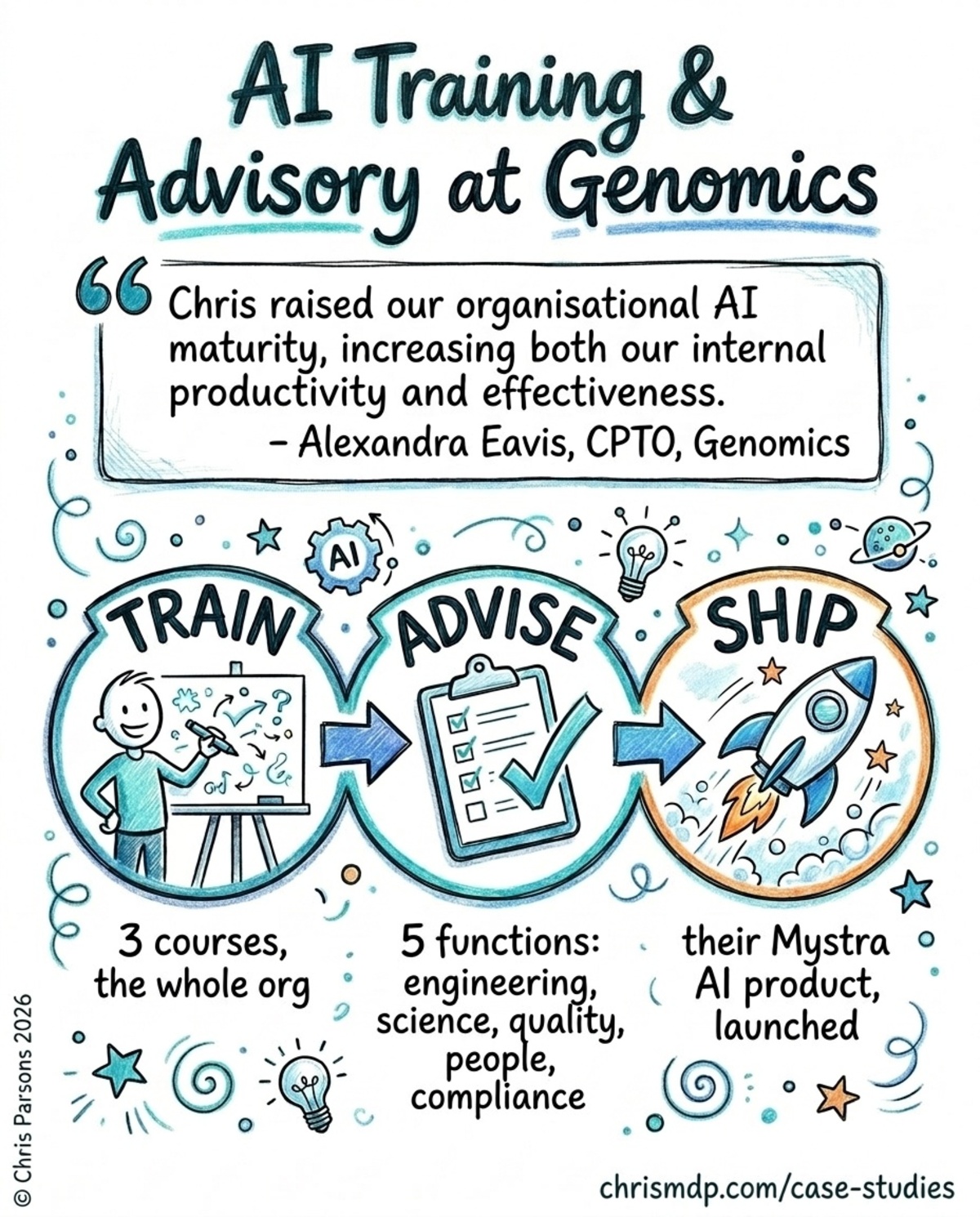

"The team and I have really benefited from and enjoyed working with Chris. He has worked cross functionally to raise our organisational AI maturity, increasing both our internal productivity and effectiveness, and clarifying the path to production for our agentic tooling. Would recommend as a great way to augment internal capabilities."
Genomics had already done what most companies struggle with. They had invested in the tools: forty Claude licences, GitHub Copilot across engineering, Gemini for the wider team. Seventy-six percent of their 47 technical staff used AI daily. The CEO and tech leads were already using Claude Code to prototype during meetings and maintain applications with leaner teams.
And yet when we surveyed the team before training, most had not yet found a structured approach to using AI effectively. One scientist’s goal for the day was to “be able to trust AI’s biological inference.” A developer wanted to “feel more confident using AI on complex multi-stage tasks.”
Genomics is a 160-person biotech firm that uses genetics to predict disease risk. Their technical team spans developers, scientists, product managers, and security engineers. The team needed a structured way to get real value from the tools they already had.
Weeks before the full-day intensive at their Oxford headquarters, we surveyed the team, reviewed their tech stack (Kotlin, React, Clickhouse, PostgreSQL on AWS), spoke with leadership, and collected real problems from across the organisation. Exercises were built around their domain and code while respecting their data governance requirements for sensitive genomic information. Every example was a Genomics example.

"I thought the content was pitched at a very good level - interesting for people who have used AI before but not so complicated as to turn off people who are completely new to the field."
The morning covered LLM fundamentals and advanced prompting. The afternoon moved into building agents, coding with AI, and role-specific breakouts where developers, scientists, product managers, and security engineers each tackled a problem from their own work.
Scientists brought the same evidence-based rigour they apply to their research, pushing back on AI reliability and demanding to see where it adds value. We steered those conversations toward practical use cases: synthesising literature, structuring communications, drafting presentations from existing conclusions.
Ria Vaidya, Lead User Researcher, came into the training just getting started with AI. Her goal was to “create prototypes for myself.” Afterwards, she and the team “were hooked.” Xavier Watkins, Associate Director of Software Engineering and already one of the strongest AI users on the team, reported that AI now “speeds up my work by more than 10x.”

"It was an extremely comprehensive session building up from the basics of LLMs to all sorts of applications in product, engineering and other functions. We were hooked!"
Participants pointed to advanced prompting as the section that changed how they worked: meta-prompting, question asking, prompt layering, and workflow chaining.
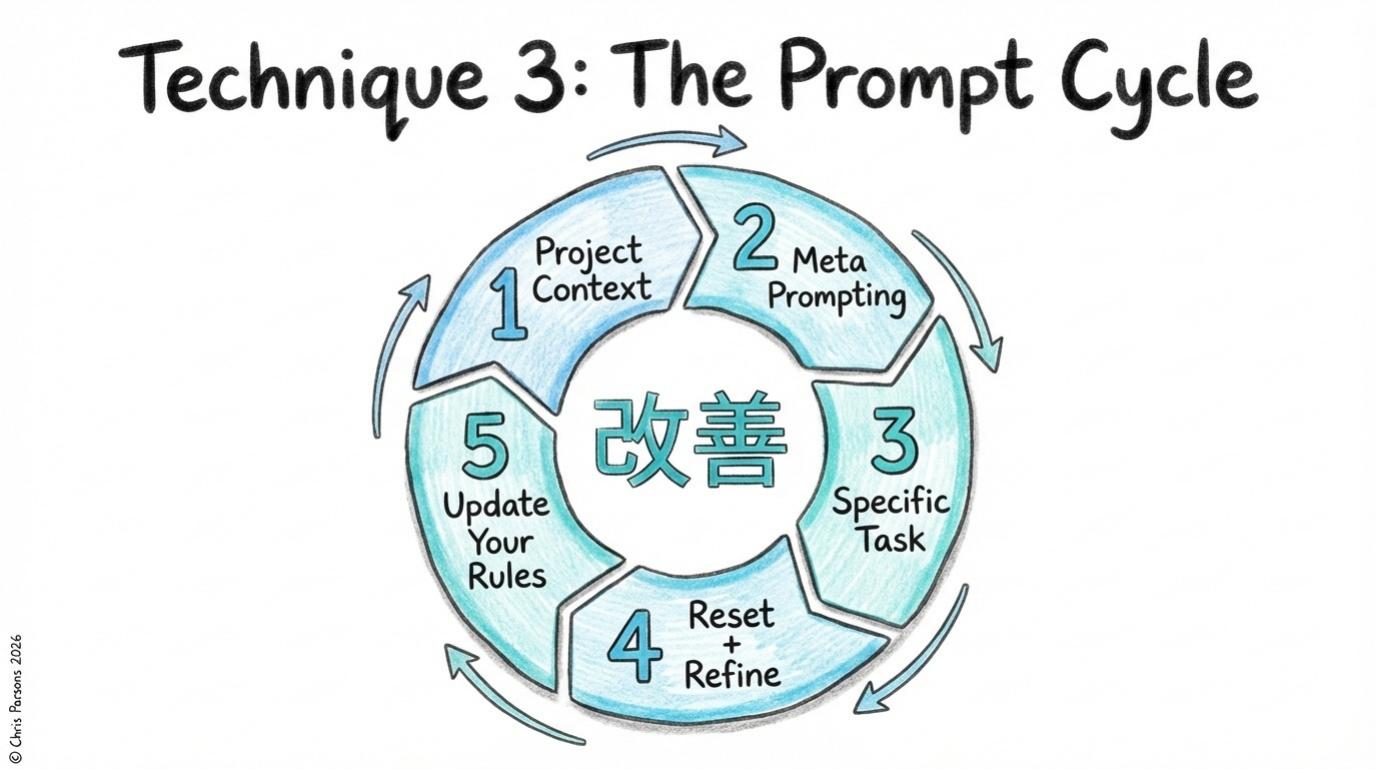
Within days, participants were applying the techniques to real work. The VP of People used the prompting approach to rewrite the company’s progression framework, working iteratively with AI to analyse what he liked about other frameworks, extract principles, and build a specific brief before generating anything.

"I learned a lot about prompting that made me think differently about how to use AI. I feel I'm coming out of this workshop with a much more intelligent approach."
What started as a single training day grew into an ongoing partnership. Two further training courses followed, levelling up the entire scientific and technical organisation. The advisory work grew alongside: advising on AI readiness assessments across engineering, science, quality, people, and compliance; guiding AI productivity measurement at the leadership level; and supporting the launch of their Mystra AI Science Assistant, helping bring a new AI product to market with the right guardrails and evaluation methodology.

"Excellent balance of theory and practice! Chris delivered content at just the right pace, mixing technical depth with practical applications we can implement immediately."
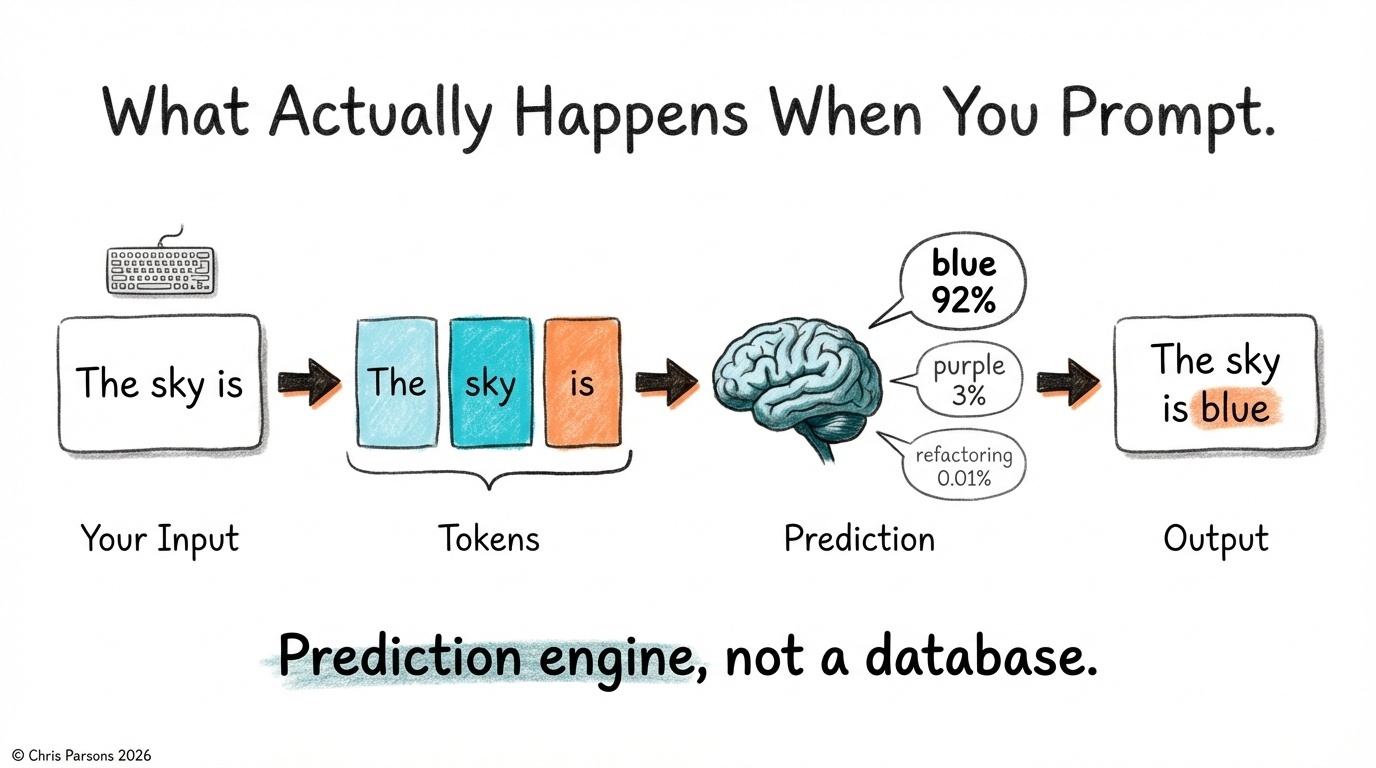
The training created a shared language across the organisation. Once a team understands what AI can and cannot do, every conversation about strategy, product, and process has traction.
Want similar results for your team? Chris works with organisations to turn AI tool investment into real productivity gains. Training is customised around your work, your problems, and your team’s skill levels, from ten-person startups to two-hundred-person organisations, on-site or remote.
Turn AI tools into AI confidence
Get customised AI training built around your team's real work. Fill in the form to get started:
Book a discovery call
Let's jump on a call to discuss how I can best help. No jargon. No hard sell. Just practical advice and a clear next step.
Fill in this form with a few more details and I'll get in touch straight away: