Webinar: AI Can Do (Most Of) Your Work
Thank you for applying to the AI Leader Accelerator.
If you have not already done so, please confirm your email address by clicking the link in the email we send you.
Once we have approved your application, you will receive an invoice at the email address you provided with your chosen payment option and instructions. If your company is paying, reply with your invoice details including company name, address, and any VAT or tax numbers as appropriate.
Once you have paid, your place is confirmed and you are officially part of the pioneer cohort.
As soon as your payment clears, you get immediate access to the Early Bird Zone, an exclusive pre-access community space. Start mixing with other AI leaders straight away, before the programme even begins. Build relationships, share challenges, and get a head start on the peer connections that will make this programme valuable.
The full programme kicks off with your first Monday afternoon session. By then, you will already know your fellow cohort members and be ready to dive in.
If you have any questions about your application or payment, just reply to any email from me or reach out directly.
chris@chrismdp.comDo feel free to answer a few more questions so I can learn more about you.
This post is based on a workshop given on 24th September 2026 at design+AI.
Building a working prototype with AI is easy now: ask Claude to build you something cool and it will. Shipping that prototype, so that it is live and useful and does not fall over, is a different problem. On Thursday I spent a morning in Brighton with a room of designers and product people working through the practices engineers rely on to make that second part possible. We did not write any code ourselves. The agent did all of that. Our job is simply knowing what to ask for.
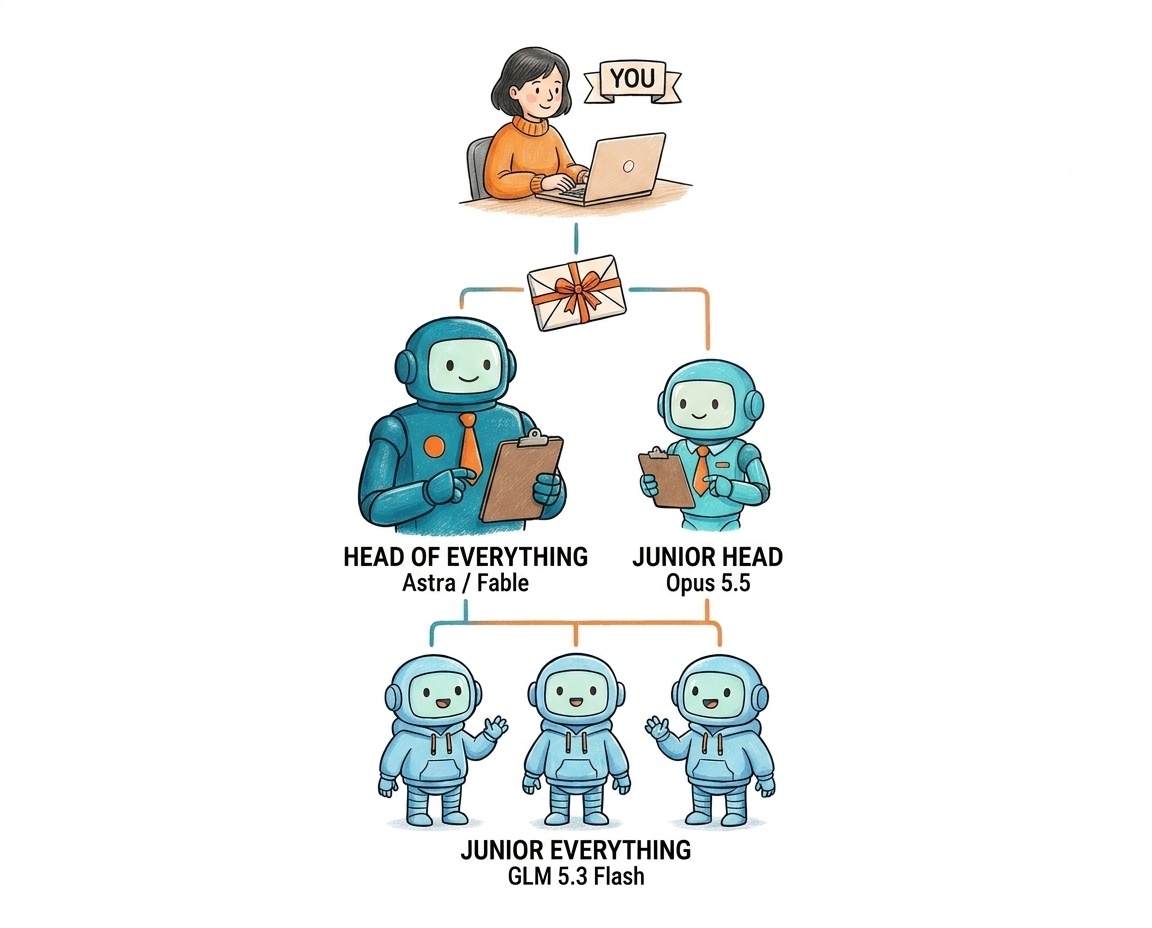
For a long time I have wanted to hand AI a senior job. When I was a CTO, this was the kind of work I would have delegated to a head of department: take a loosely described outcome, work out what it really needs, split it up, get other people to do the pieces, and come back with something finished while I got on with my own work.
That goal has been elusive for years. Until very recently, the best description of an AI model was an overeager junior. Delegating to one meant giving it lots of context, and then watching it closely. That was fine, but frustrating.