Thanks!

Latest Articles

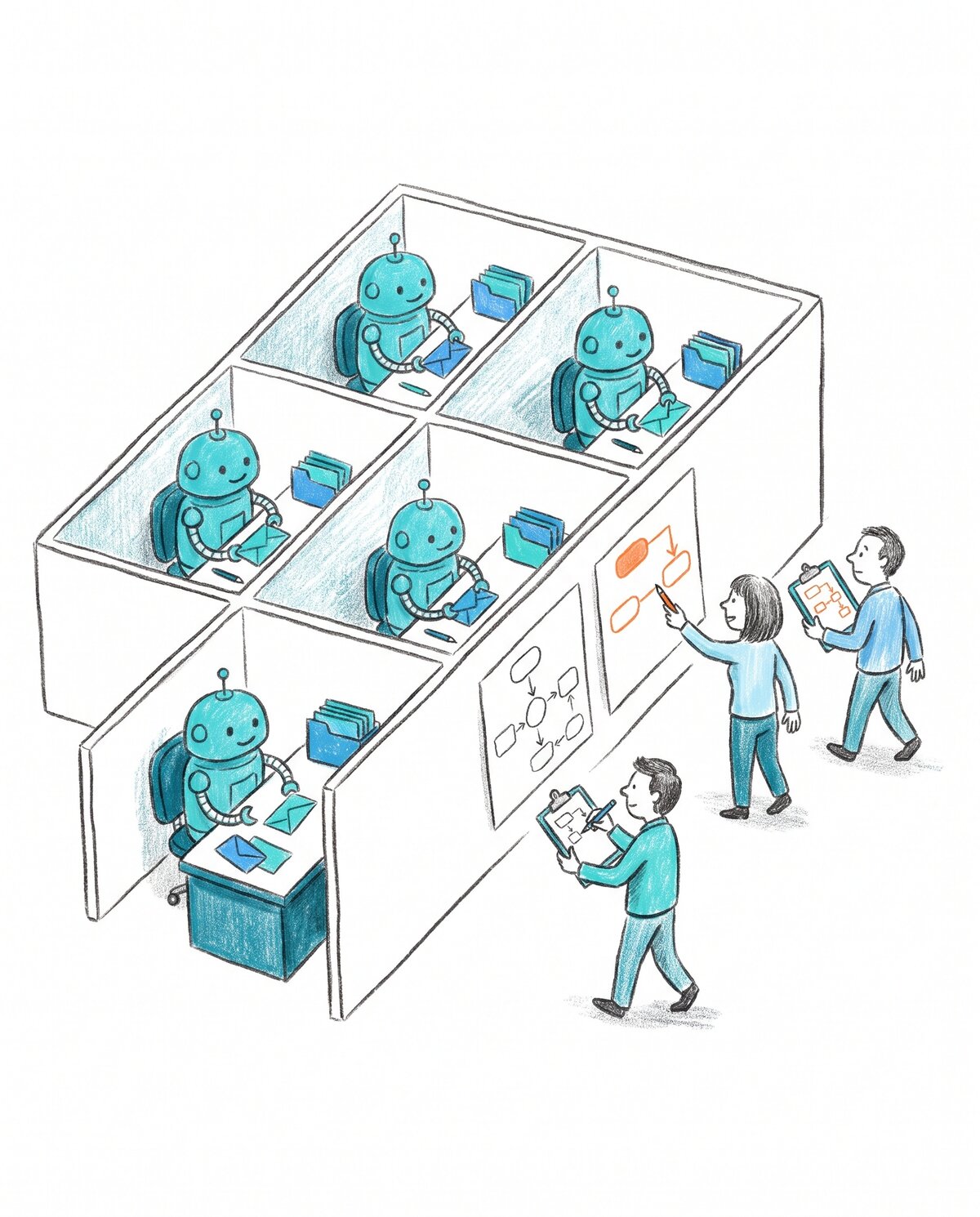
Bots Are Not People

November 2026
Bots Are Not People
Every week, I try and have a day without meetings. On these days I relish the peace and quiet and try and get some serious experimentation and learning done with AI. I might be building new things, or reading articles, or just clearing the decks to help me focus the rest of the week.
Read more →

AI Has a People Problem

November 2026
AI Has a People Problem

This page is based on my talk at Øredev in Malmö on 4 November 2026. You can see the slides here.

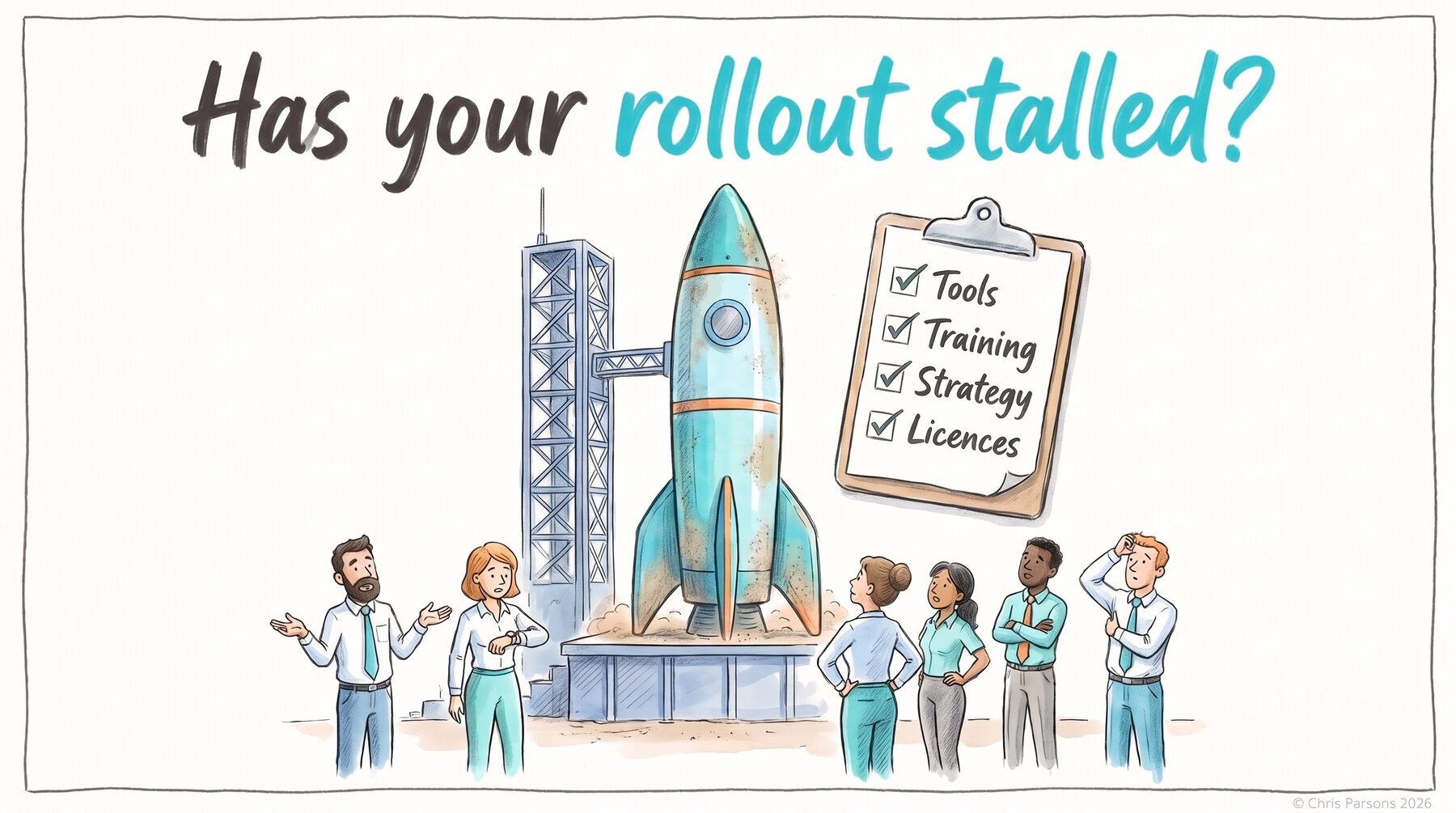
The AI tools work. People have been trained. The strategy has been signed off. Yet many rollouts stall when teams try to change how they actually work.

Slide: 'Has your rollout stalled?' A rocket sits on the launch pad with tools, training, strategy and licences all ticked off, while the people around it shrug.

When I went back through my client conversations, the obstacles were rarely about whether the technology could do the job. They were about what the change meant for the people doing it.

Read more →

Seven AWML Findings in Yegge's Design

October 2026
Seven AWML Findings in Yegge's Design
Steve Yegge published The Counting House this week, a design for letting cheap AI models handle customer service one kind of case at a time. He calls it a postcard introduction, and it is a good design, so I drew it in AWML to test both the modelling language and the design. An evening of drawing turned up seven findings, before anyone built anything.
Read more →

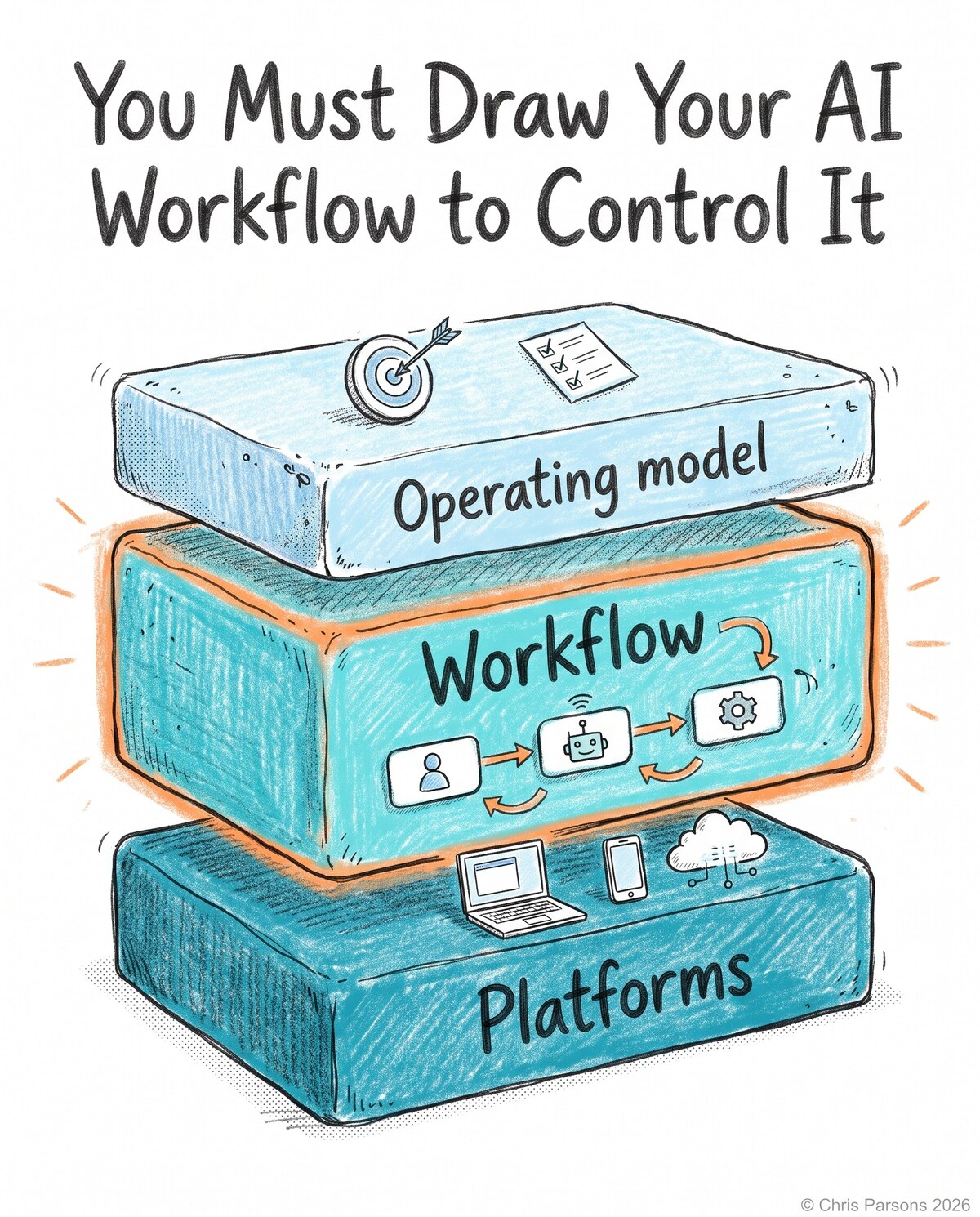
You Must Draw Your AI Workflow to Control It

October 2026
You Must Draw Your AI Workflow to Control It

I have been building my own workflows, working in tandem with AI, for over a year now. Like many others, I started by giving Claude Code access to my existing Obsidian vault, and did a lot of things ad hoc. Then I installed OpenClaw, and promptly removed it again. So that I could reach everything remotely, I rented a VPS to run Claude Code from my phone, and started scheduling tasks. I then built my own project review board to bring GTD to my work, and moved to Telegram bots and several agents with small remits to organise the work further, which I am still experimenting with.

I have built a lot of stuff. A lot of it even works.

However, many of the AI systems that AI has built for me are no longer useful. Some of it has rotted, or is less useful than before, but still runs. It costs me time to review (though not enough to make me turn it off) and a tiny but growing token tax.

Plenty of companies I speak to have the same issues, multiplied. Broken workflows are a far greater burden when they infect an entire organisation, and people are trying to get to grips with them and organise them.

In all of this I have realised that there is no shared vocabulary yet for the AI routines that run my life and work. We hear people say “I have automated my business using AI”. But how do they keep it going? How do they know where their data is? How can we even describe everything they are running? We generate endless artefacts and share them with others, yet it is hard to know what data drove them, or whether other people are even allowed to see them.
Read more →

Seven AI Predictions From 1882

October 2026
Seven AI Predictions From 1882
In the late nineteenth century, J. P. Morgan, already one of the most powerful bankers in New York, wanted electric light before anyone else had it. So Thomas Edison's people put a steam engine and generators in the stable behind his house on Madison Avenue, and ran the power to the house through a brick conduit under the yard.
Read more →